
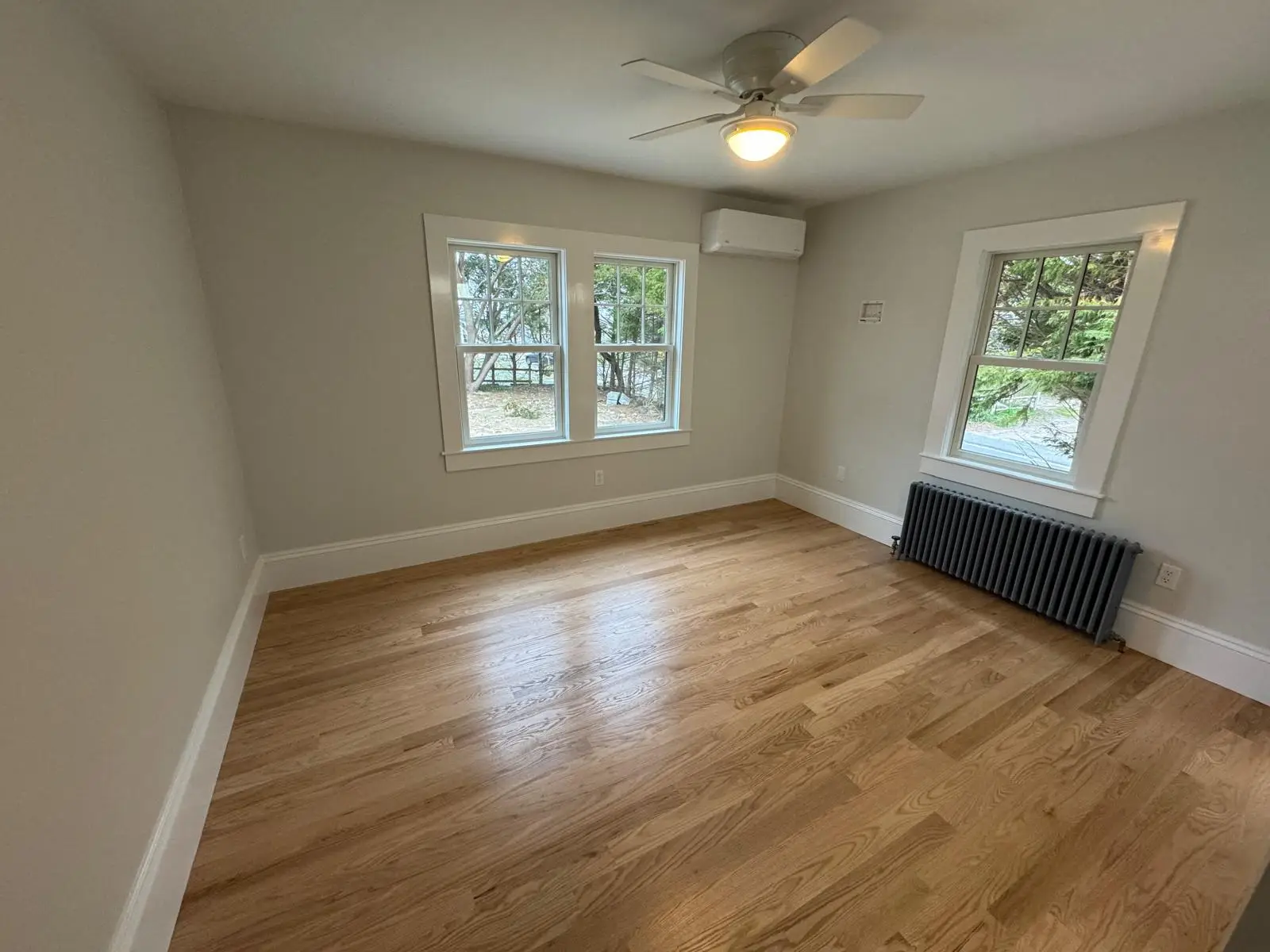
Estimating the right amount of paint for your bedroom project can save you both time and money. Buying too little means an extra trip to the store, risking color inconsistencies between batches, and delaying your project. Buying too much leads to wasted product and storage challenges. This guide will help you accurately calculate your paint needs, taking into account various factors that influence how much paint you’ll truly use.
Factors that affect paint quantity
Several variables come into play when determining how much paint you’ll need. Understanding these will lead to a more precise estimate.
Room size and ceiling height
The most obvious factor is the total surface area of the walls and, if you’re painting it, the ceiling. Larger rooms with higher ceilings will naturally require more paint.
- Measuring Walls: Measure the length of each wall and multiply it by the height of the wall to get the square footage for each wall. Add these together for the total wall square footage.
- Measuring Ceiling: Measure the length and width of the ceiling and multiply them to get the ceiling’s square footage.
Number of windows and doors
Windows and doors are areas that typically won’t be painted (or will be painted with trim paint, which is calculated separately). These areas should be subtracted from your total wall square footage.
- Measuring Windows: Measure the height and width of each window and multiply to get its square footage.
- Measuring Doors: Measure the height and width of each door and multiply to get its square footage.
Paint type and coverage rate
Not all paints are created equal, and their coverage rates can vary significantly.
- Coverage Rate: Most standard paints (latex/acrylic) will cover approximately 350-400 square feet per gallon for one coat. However, premium paints or those with built-in primer might offer slightly better coverage (up to 450 sq ft/gallon), while cheaper paints might require more. Always check the manufacturer’s specifications on the paint can label for the exact coverage rate.
- Color Change: If you’re painting a light color over a dark one, or a dark color over a light one, you will almost certainly need two coats of paint (and possibly a tinted primer). This immediately doubles your paint needs for the topcoat.
- Surface Condition: Highly porous surfaces (like new drywall) will absorb more paint on the first coat than previously painted, smooth surfaces. You might need an extra gallon or a dedicated primer for new drywall.
- Finish: Matte or flat finishes tend to be slightly less opaque and might require more paint than semi-gloss or high-gloss finishes for the same coverage, though this difference is usually minor.
Standard paint calculations for bedrooms
Let’s break down how to calculate paint needs step-by-step with a common example.
Example bedroom dimensions:
- Length: 12 feet
- Width: 10 feet
- Ceiling Height: 8 feet
- Number of Doors: 1 (standard size: 3 ft x 7 ft)
- Number of Windows: 1 (standard size: 4 ft x 3 ft)
- Assume 2 coats of paint are needed.
- Assume paint coverage is 350 sq ft per gallon.
Step-by-step calculation:
- Calculate Perimeter of the Room:
- Perimeter = 2 * (Length + Width)
- Perimeter = 2 * (12 ft + 10 ft) = 2 * 22 ft = 44 ft
- Calculate Total Wall Area (without deductions):
- Wall Area = Perimeter * Ceiling Height
- Wall Area = 44 ft * 8 ft = 352 sq ft
- Calculate Area of Doors and Windows:
- Door Area = 3 ft * 7 ft = 21 sq ft
- Window Area = 4 ft * 3 ft = 12 sq ft
- Total Deduction Area = 21 sq ft + 12 sq ft = 33 sq ft
- Calculate Paintable Wall Area:
- Paintable Wall Area = Total Wall Area – Total Deduction Area
- Paintable Wall Area = 352 sq ft – 33 sq ft = 319 sq ft
- Calculate Ceiling Area (if painting):
- Ceiling Area = Length * Width
- Ceiling Area = 12 ft * 10 ft = 120 sq ft
- Calculate Total Paintable Surface Area (for one coat):
- Total Surface Area = Paintable Wall Area + Ceiling Area (if painting ceiling the same color)
- Total Surface Area = 319 sq ft + 120 sq ft = 439 sq ft
- Calculate Paint Needed for One Coat:
- Gallons for One Coat = Total Surface Area / Coverage Rate
- Gallons for One Coat = 439 sq ft / 350 sq ft/gallon 1.25 gallons
- Calculate Total Paint Needed for Two Coats:
- Total Gallons = Gallons for One Coat * Number of Coats
- Total Gallons = 1.25 gallons * 2 = 2.5 gallons
Conclusion for Example: For this example bedroom, you would need 2.5 gallons of paint for the walls and ceiling (assuming both are painted the same color) with two coats. Since paint is typically sold in full gallons, you would likely buy 3 gallons to be safe and have some for touch-ups.
General Rule of Thumb: For an average-sized bedroom (around 10×12 to 12×14 feet), 2 gallons is often sufficient for two coats on the walls, assuming average ceiling height and subtracting windows/doors. If you’re also painting the ceiling the same color, or if it’s a very large room, 3 gallons is a safer bet.
Tools to help estimate paint needs
Beyond manual calculations, several resources can simplify the process:
- Online Paint Calculators: Most major paint brands (e.g., Sherwin-Williams, Benjamin Moore, Behr) offer free online calculators on their websites. You simply input your room dimensions, and they’ll provide an estimate.
- Paint Store Staff: The staff at your local paint store are often very knowledgeable and can help you calculate your needs if you provide them with your room measurements.
- Smartphone Apps: There are various home improvement apps that include paint estimators.
Tips to avoid running out or overbuying paint
- Always Buy a Little Extra: It’s almost always better to have a bit of leftover paint than to run out mid-project. Leftover paint can be used for touch-ups later. A half-gallon or a quart extra is usually sufficient.
- Consider Primer Separately: If you’re using a separate primer, calculate its needs based on its specific coverage rate. Primer is often cheaper than finish paint, so don’t count it as part of your finish paint quantity.
- Mix All Cans of the Same Color: If you’re using more than one gallon of the same color, it’s a good practice to “box” them (pour all the gallons into a larger bucket and mix them together) before you start. This ensures a perfectly consistent color across all walls, eliminating any subtle batch variations.
- Store Leftover Paint Properly: Seal paint cans tightly, store them upside down for a better seal, and keep them in a cool, dry place away from extreme temperatures. This extends the shelf life for future touch-ups.
- Measure Twice, Buy Once: Double-check all your measurements before heading to the store. A small error in measuring can lead to significant discrepancies in your paint estimate.