
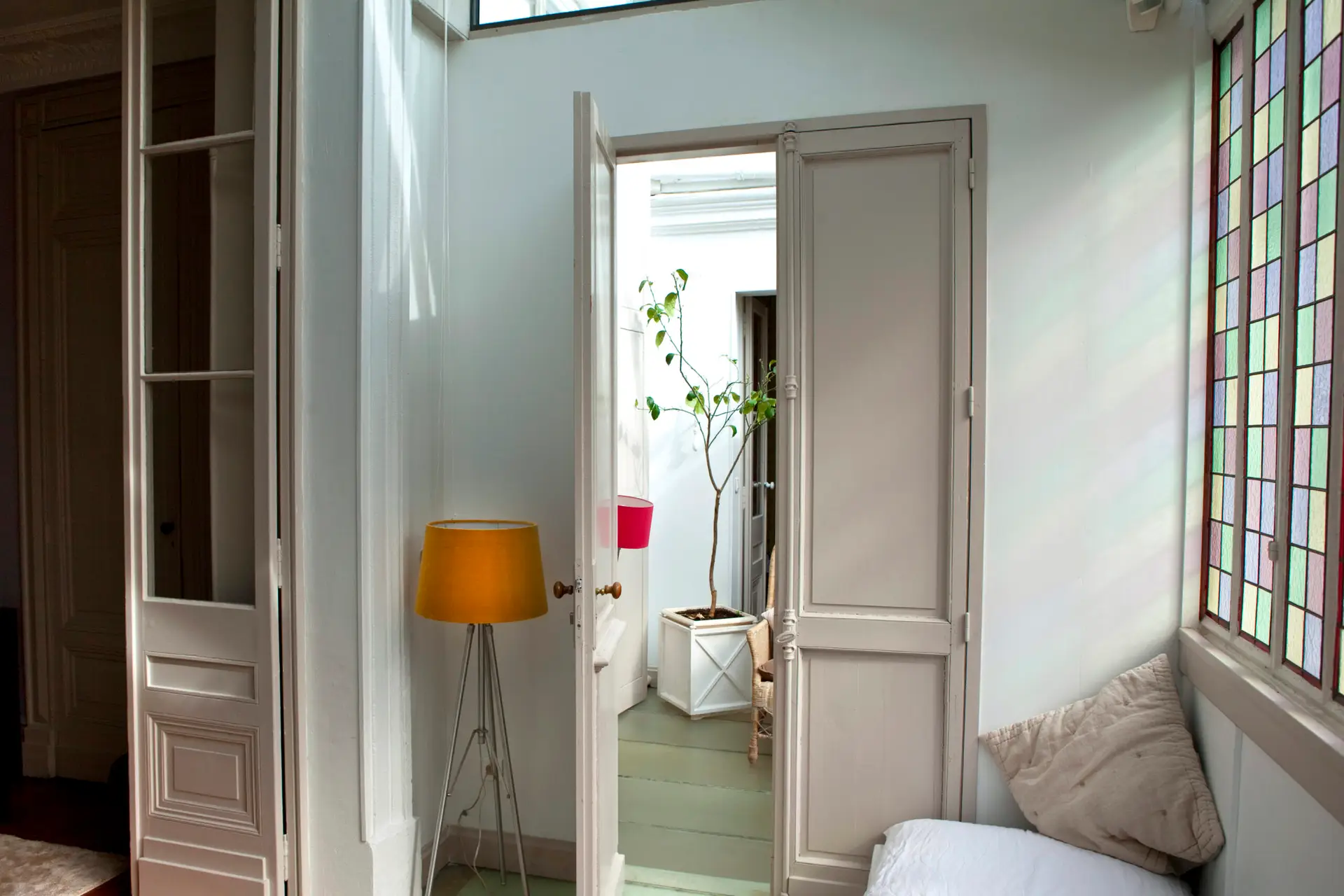
Interior doors are often a forgotten element in home design, but they play a crucial role in tying a space together. A fresh coat of paint can turn a plain door into a powerful design statement, adding character, depth, and a touch of personality to any room. From classic neutrals to bold accent tones, the right color can completely transform the look and feel of your home’s interior.
Classic Neutral Options
These timeless colors offer a clean, elegant look that works with virtually any design style.
White and Off-White
White doors are a classic for a reason. They create a clean, crisp, and airy feel that can make a space look more expansive. A pure white provides a stark, modern contrast against colored walls, while an off-white with subtle warm or cool undertones can feel softer and more inviting. This is an ideal choice for a seamless, minimalist look.
Light Grays and Beige
For a look that’s a step away from pure white, light grays and beiges are excellent choices. A light gray door provides a modern, sophisticated feel that pairs beautifully with a wide range of colors. A soft beige or greige (a mix of gray and beige) can add a subtle warmth that is incredibly versatile and creates a cozy, welcoming atmosphere.
Bold Interior Door Colors
If you want to make a statement, a bold color on your interior door is a fantastic way to introduce a pop of personality.
Black for Contrast
A black door is a powerful design choice that adds instant drama and elegance. Paired with light walls and trim, it creates a striking, graphic contrast that defines a space. Black doors work exceptionally well in modern, contemporary, and farmhouse-style homes, making the entrance to a room a true focal point.
Navy Blue and Deep Green
Deep jewel tones are trending for a reason. A rich navy blue or a deep forest green can add a sense of luxury and sophistication to a room. These colors are moody and dramatic but also feel cozy and inviting. They can be a great way to introduce a touch of color without overwhelming the space.
Rich Wood Tones
While not a paint color in the traditional sense, staining a door to a rich, warm wood tone is a classic choice that adds a sense of tradition and natural warmth. This works especially well in homes with exposed wood beams or other natural elements, creating a cohesive, organic feel.
Matching Doors with Wall Colors
The color you choose for your door should be a deliberate decision based on the overall design of your room.
Complementary vs. Contrasting Styles
- Complementary: For a subtle, cohesive look, paint your door in a color that is complementary to your wall color. This could be a slightly darker or lighter shade of the wall color, or a tone with a similar undertone. This approach creates a seamless flow between rooms.
- Contrasting: For a more dramatic, modern look, choose a color that contrasts with your walls. A white wall with a black door, or a light gray wall with a deep blue door, can make a powerful design statement.
Tips for Cohesive Design
To ensure your door color feels intentional, try to match it with other elements in the room. For example, a navy blue door could complement a navy sofa or throw pillows. The goal is to make the door color feel like a deliberate part of the design, not just an afterthought.
Trending Door Colors in 2025
Designers in 2025 are embracing colors that feel organic and grounded.
Muted Earth Tones
Muted shades of olive green, terracotta, and soft brown are trending for interior doors. These colors connect the indoors to the outdoors and create a serene, calm, and sophisticated atmosphere. They pair beautifully with natural wood floors and linen fabrics.
Pastel Highlights
Soft pastels are also making a comeback, but in a more muted, elegant way. Think dusty rose, sage green, or a light sky blue. These colors add a gentle pop of personality and a whimsical touch to a room without being overpowering.
FAQs
Should interior doors match trim color?
It’s a classic and common practice for interior doors to match the trim color. This creates a clean, traditional look. However, it’s not a rule. You can create a striking contrast by painting the door a different color from the trim, which can be a great way to add visual interest.
Do dark doors make a hallway smaller?
Not necessarily. While a dark color can absorb light, a dark door can also act as a strong focal point that gives a hallway a sense of direction and purpose. When paired with light walls and a bright ceiling, a dark door can create a beautiful contrast that makes the space feel more intentional and sophisticated, rather than just small.
Ready to find the perfect color for your interior doors? Mass Pro Painting specializes in professional interior painting services. Contact us today for a free estimate and a flawless, beautiful finish!