
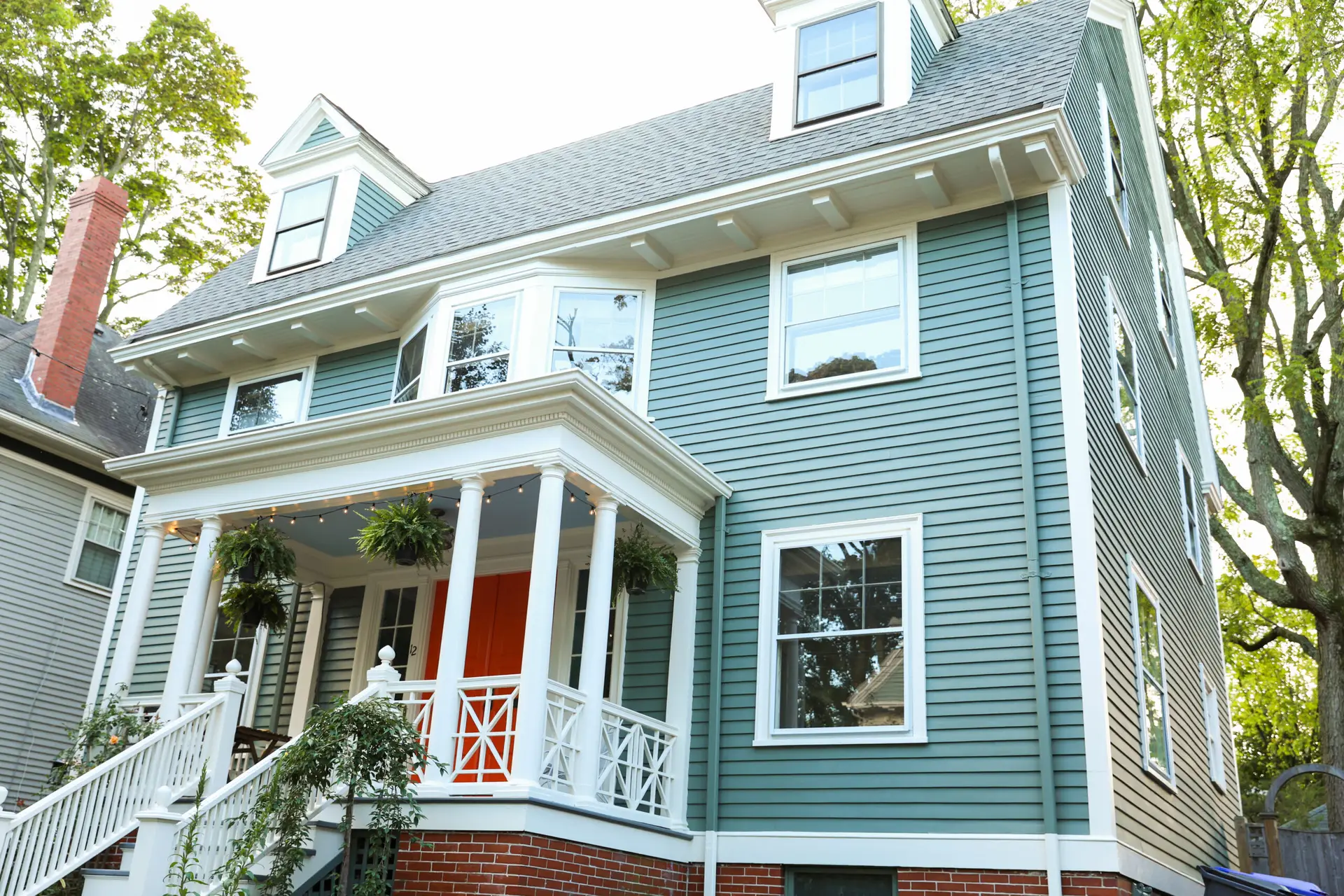
Exterior house painting is more than just a cosmetic upgrade; it’s a critical investment in your home’s structural integrity. A quality paint job acts as the primary shield against sun, rain, and temperature fluctuations, preventing moisture intrusion and costly repairs down the line.
Understanding the lifespan of different surface materials and knowing the signs of paint failure are essential for proactive home maintenance.
Factors That Affect Paint Longevity
The durability of your exterior paint is not uniform; it varies significantly based on environmental conditions and the quality of the original application.
Type of Paint and Surface Material
The pairing of paint chemistry with the substrate material is the most significant factor in longevity.
- Paint Quality and Chemistry: Premium $100\%$ acrylic latex paints offer superior adhesion, flexibility, and resistance to blistering compared to lower-grade alternatives. The flexibility of acrylic polymers allows the paint film to expand and contract with the house materials during temperature changes, minimizing cracking.
- Surface Porosity: Porous materials, like wood and stucco, absorb paint and anchor it better, but they are also more susceptible to moisture damage if the paint fails. Non-porous materials like vinyl or aluminum are less absorbent, requiring specialized primers and paints for optimal adhesion, but the paint’s longevity often comes down to its resistance to UV breakdown.
- Preparation: Proper preparation—including cleaning, scraping loose paint, sanding, and applying the correct primer—can add several years to the life of any paint job. Paint applied over poorly prepped surfaces is destined to fail quickly.
Weather Exposure and Maintenance
The environment your home sits in dictates the stress placed on the paint film.
- Sun Exposure (UV Rays): Direct, prolonged sunlight is the number one enemy of exterior paint. Ultraviolet (UV) radiation breaks down the paint’s binder (the material that holds the pigment together and keeps the paint adhered). This leads to chalking (a powdery residue), fading, and eventual film failure. South- and West-facing walls will always require maintenance sooner than North-facing walls.
- Moisture and Humidity: High-humidity environments and frequent rain or snow exposure accelerate paint degradation. Excessive moisture causes wood to swell, which puts stress on the paint film. If water penetrates the coating, it can cause blistering and peeling.
- Maintenance: Regular, gentle cleaning (like soft washing every one to three years) removes dirt, dust, and mildew growth. This practice is crucial because grime can trap moisture and harbor mold spores, which actively degrade the paint finish.
Average Repainting Timeline by Surface
These timelines represent the average expected lifespan for a quality paint application on common U.S. home exteriors under typical conditions.
Wood Siding: Every $3-7$ Years
Wood is an organic, porous material that is constantly expanding and contracting with temperature and moisture.
- The Challenge: The natural movement of wood puts significant stress on the paint film, making it highly susceptible to cracking and peeling.
- Maximizing Life: To reach the $7$-year mark, the wood must be properly primed and painted with a flexible $100\%$ acrylic latex coating. Homes in harsh, sunny climates or coastal regions will likely fall on the shorter end of this spectrum.
Stucco: Every $5-6$ Years
Stucco, a cement-based mix, is highly porous and prone to cracking, which allows water to penetrate the system.
- The Challenge: Stucco often needs specialized, highly breathable paint (often elastomeric or high-grade acrylic) that can flex over hairline cracks without sealing in moisture.
- Maximizing Life: Repainting closer to the $5$-year mark ensures minor cracks are sealed before they become major water intrusion points.
Brick or Vinyl: Every $10-15$ Years
These materials are highly durable and offer the longest lifespan for paint coatings.
- Brick: Unpainted brick typically never needs repainting. However, if brick is painted, it requires specific breathable masonry paints or stains. Due to the high stability of brick, the paint lasts until the UV rays degrade the top layer, easily stretching past $10$ years.
- Vinyl Siding: Since vinyl is a synthetic, non-porous material, it does not rot or absorb moisture. Paint failure on vinyl is almost exclusively due to the sun breaking down the paint’s pigment. Modern vinyl-safe paint (often designed to reflect UV rays and prevent excessive heat absorption) allows for exceptional longevity.
Signs It’s Time to Repaint
Ignoring these visual cues will inevitably lead to more significant, more expensive repairs involving the structure beneath the paint.
Peeling, Fading, or Cracking Paint
These are definitive signs that the paint film has failed and is no longer protecting the underlying material.
- Peeling: Occurs when the paint loses adhesion to the surface, often due to trapped moisture or poor surface preparation during the initial job. Once peeling starts, the exposed substrate is vulnerable to rot.
- Fading (Chalking): A powdery residue that appears when the binder has been broken down by UV rays. This means the paint is no longer adhering properly or providing full UV protection to the pigments.
- Cracking (Alligatoring): Occurs when the paint film loses its elasticity. This allows water to infiltrate the siding or stucco, accelerating structural decay.
Mold or Water Stains
The presence of biological growth or visible moisture marks is a serious alert.
- Mold, Mildew, and Algae: These growths are unsightly and indicate high moisture retention. If left unchecked, the organic acids they produce will actively eat into the paint film and, eventually, the siding itself.
- Water Stains/Discoloration: Dark streaks often signal water runoff issues (e.g., failing gutters or flashing). Repainting alone won’t solve this; the underlying moisture problem must be fixed first, followed by a fresh coat of paint to restore the protective barrier.
How Regular Painting Protects Your Home
Routine repainting is the most cost-effective insurance policy you can buy against major exterior deterioration.
Prevents Moisture Damage and Wood Rot
Paint’s primary structural function is to create a seamless, water-repellent barrier.
- Sealing Vulnerabilities: A fresh coat of paint seals up microscopic cracks, gaps, and areas around trim where moisture can infiltrate the structure.
- Wood Preservation: By preventing water from soaking into wood siding and trim, painting protects against soft spots, warping, and the decay caused by wood-boring insects and rot-causing fungi.
Increases Curb Appeal and Value
A professionally painted exterior offers an immediate, high-return aesthetic improvement.
- First Impressions: A vibrant, well-maintained exterior dramatically improves curb appeal, which is especially important if you plan to sell. Buyers view a well-painted exterior as a sign of overall meticulous home maintenance.
- Value Retention: An aging, dull, or peeling exterior can significantly detract from your home’s perceived market value. Repainting restores the finish and signals that the house is structurally protected, translating directly into higher appraisal values.
FAQs
Does darker paint fade faster?
Generally, yes. Darker paints absorb more of the sun’s heat and UV energy, which accelerates the breakdown of the paint’s pigments and binder. Modern, high-quality dark-color paints are formulated with improved UV resistance; however, they still degrade faster than light or neutral colors that reflect more heat and light.
Can I extend paint life with yearly touch-ups?
Yearly touch-ups are a very effective strategy for extension, provided you focus on vulnerable areas. Sanding, cleaning, and painting areas of slight peeling or cracking before they spread can prevent a small $1$-foot problem from turning into a full-siding failure. This proactive maintenance can stretch the need for a full, costly repaint by several years, making it a highly recommended practice for savvy homeowners.
Protect Your Investment. Schedule Your Estimate.
Don’t wait for peeling and cracking to compromise your home’s structure. Proactive painting is preventative maintenance that saves you thousands in repairs.
The experts at Mass Pro Painting specialize in thorough prep work and utilizing top-tier $100\%$ acrylic products, ensuring your home receives the longest-lasting, most protective finish possible.
Contact Mass Pro Painting today for a free, comprehensive exterior assessment and quote.