
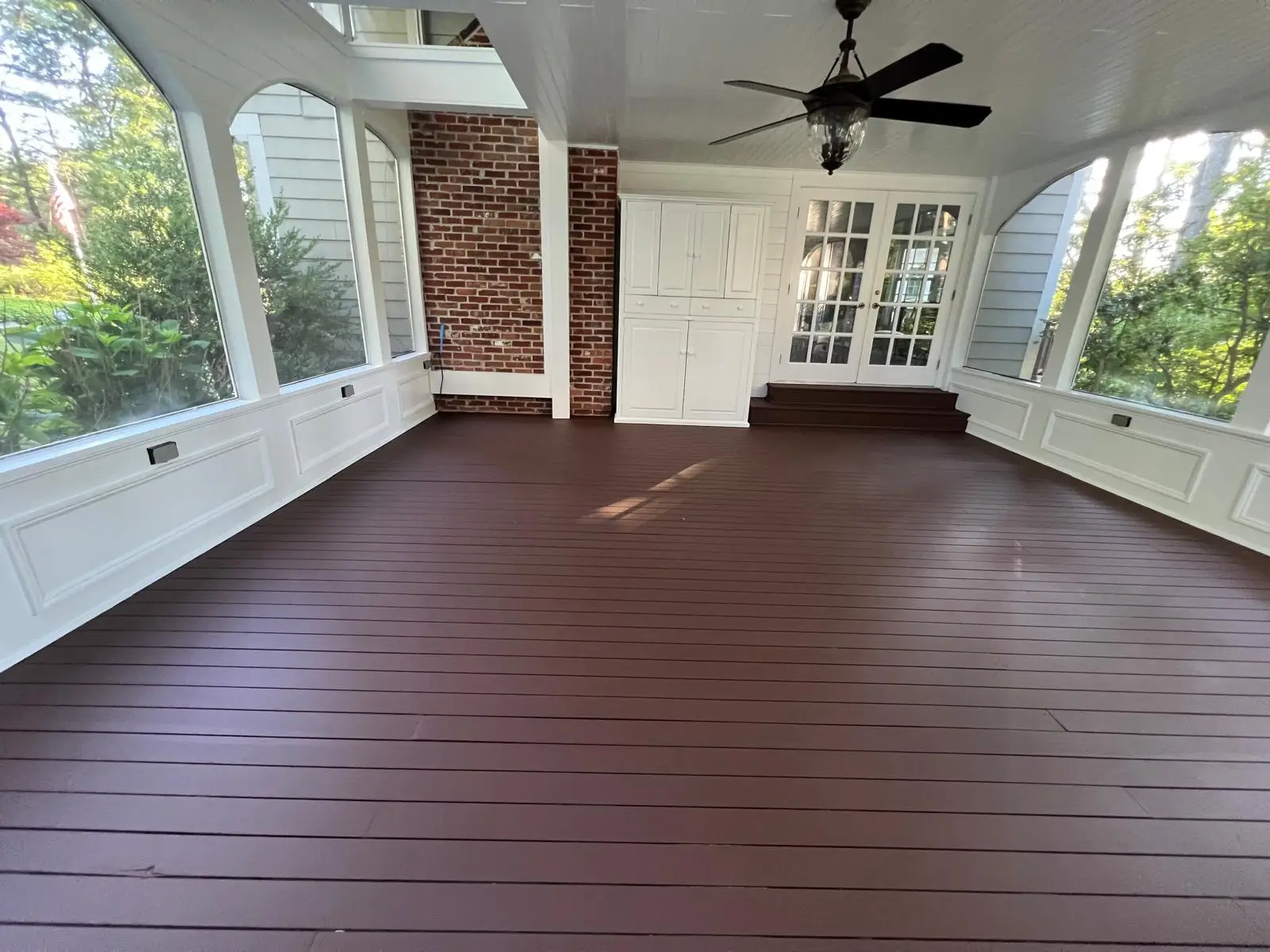
Porches, decks, and interior floors painted with standard coatings fail quickly because they require a highly specialized class of paint. Unlike vertical walls, horizontal surfaces endure constant abrasion, direct sunlight, and physical impact. Choosing the correct product and executing meticulous preparation are the only ways to ensure a long-lasting, durable finish.
Mass Pro Painting specializes in high-performance floor and porch coatings, delivering a beautiful finish engineered to withstand heavy use and harsh weather.
What Makes Floor & Porch Paint Different from Wall Paint
The distinction between conventional paint and floor paint comes down to resilience and physical composition.
Higher Abrasion and Traffic Levels
Floor and porch coatings are formulated with higher solids and often include resins like epoxy or polyurethane that cure to a much harder, more dense film than standard latex wall paint. This hard shell resists the constant friction and scuffing caused by foot traffic, furniture movement, and dragging items.
Exposure to Outdoor Elements (if Exterior)
Exterior porch paint must be flexible enough to handle the expansion and contraction of wood or concrete caused by temperature swings. It must also have superior UV resistance to prevent fading, chalking, and premature cracking that occurs when ordinary paint is exposed to sunlight and rain.
Need for Slip Resistance and Durability
Safety is paramount. Porch paints are designed to be compatible with anti-slip additives (like fine sand or polymer grits) or may be inherently textured. Furthermore, floor paint is resistant to pooling water and cleaning chemicals, ensuring the surface remains protected and hygienic.
Choosing the Right Paint for Floor & Porch Surfaces
The ideal paint depends entirely on the substrate (the material underneath) and the environment (indoor vs. outdoor).
Concrete, Wood, Composite Decking Options
- Concrete: Requires 100% acrylic floor paint or specialized epoxy coatings. These must be highly resistant to alkalinity and designed to bond deep within the porous surface.
- Wood Porches & Decks: Requires exterior porch and floor enamel. These are often acrylic-based and offer flexibility to prevent cracking as the wood naturally expands and shrinks.
- Composite Decking: Can be tricky. Use specialty composite deck refreshers or coatings, as standard paint may not adhere well to the plastic components and can void the decking warranty.
Exterior vs. Interior Floor Paints
- Exterior: Must have maximum UV resistance, flexibility, and anti-mildew agents. They are breathable to allow moisture to escape from the wood or concrete without blistering the paint.
- Interior: Focuses on high abrasion and chemical resistance (especially for garage or basement floors), often utilizing stronger epoxy systems that do not need UV protection.
Matte vs. Gloss—Visibility of Scuffs
- Matte/Satin Finish: Recommended for high-traffic areas. These finishes hide minor scuffs, dirt, and surface imperfections much better than high-gloss options.
- Gloss/Semi-Gloss: Highly durable and easiest to clean, but they show every scratch, footprint, and surface imperfection due to their reflectivity.
Surface Prep & Application Tips
The durability of your floor coating is 90% dependent on the quality of your preparation work.
Cleaning, Degreasing, Repairing Surfaces
- Clean: Power-wash or scrub the surface with a heavy-duty cleaner and degreaser (like a TSP substitute) to remove all dirt, oil, and mildew.
- Repair: Fill all cracks, holes, and voids with a flexible, exterior-grade wood filler (for wood) or a polymer-based concrete patch (for concrete).
- Etch (Concrete only): New or smooth concrete must be acid-etched to open up the pores, allowing the paint to bond effectively. Rinse thoroughly after etching.
Priming When Needed
A primer is often required for:
- New wood: Use an oil-based primer to block tannins and prevent bleeding (especially in cedar or redwood).
- Etched concrete: Use a concrete bonding primer to ensure deep penetration and superior topcoat adhesion.
Applying in Suitable Weather Conditions
For exterior work, check the weather forecast. Paint should be applied in moderate temperatures (typically 50°F to 85°F) with low humidity and no chance of rain for at least 24 hours. Never paint in direct, intense midday sun, as this causes the paint to dry too quickly, leading to poor adhesion.
Re-Coat and Maintenance Schedule
Always apply two thin coats, allowing the full manufacturer-recommended drying time between coats. Plan to inspect and touch up or re-coat the floor every 3 to 5 years, depending on traffic and UV exposure, to maintain optimal protection.
Design & Color Considerations
Floor color plays a large role in the overall aesthetic and practicality of your space.
Color Trends for Porches
Neutral grays (like slate or charcoal) and rich browns are currently the most popular choices, offering a sophisticated look that pairs well with virtually any home exterior color. Earth tones help camouflage dust and minor scuffs better than bold, solid colors.
Contrasting Floor + Railing/Trim
To define the space, a popular design technique is to use a slightly darker color on the floor than on the railings, trim, or stairs. This grounds the porch visually and makes the surrounding architectural details appear crisp and bright.
Texture/Anti-Slip Additives
Safety is critical. For a porch or deck that is exposed to rain, consider adding a non-slip aggregate to the final coat of paint. This material provides subtle texture underfoot, significantly increasing traction and reducing the risk of slips, especially when the surface is wet.
FAQs
“Can I use regular interior paint on a porch floor?”
Absolutely not. Regular interior paint is soft, lacks chemical resistance, and is not formulated to handle the abrasion of shoes or UV exposure. It will quickly scratch, chip, and peel off an exterior floor surface, leading to a major failure.
“How long before light traffic after painting?”
This depends entirely on the product used, but generally:
- Light Foot Traffic: Usually safe after 24–48 hours.
- Heavy Use/Furniture: Must wait for the paint to achieve its full cure time, which can take 5 to 7 days for acrylics and up to 30 days for some epoxy systems.
“What finish holds up best outdoors?”
Exterior-grade acrylic floor enamels (semi-gloss or satin) typically provide the best balance of durability, UV resistance, and flexibility needed to handle wood movement and temperature changes on an outdoor porch or deck.
Ready for a durable, beautiful floor finish that lasts?
Contact Mass Pro Painting today for a specialized assessment and estimate for painting your porch or floor surface.