
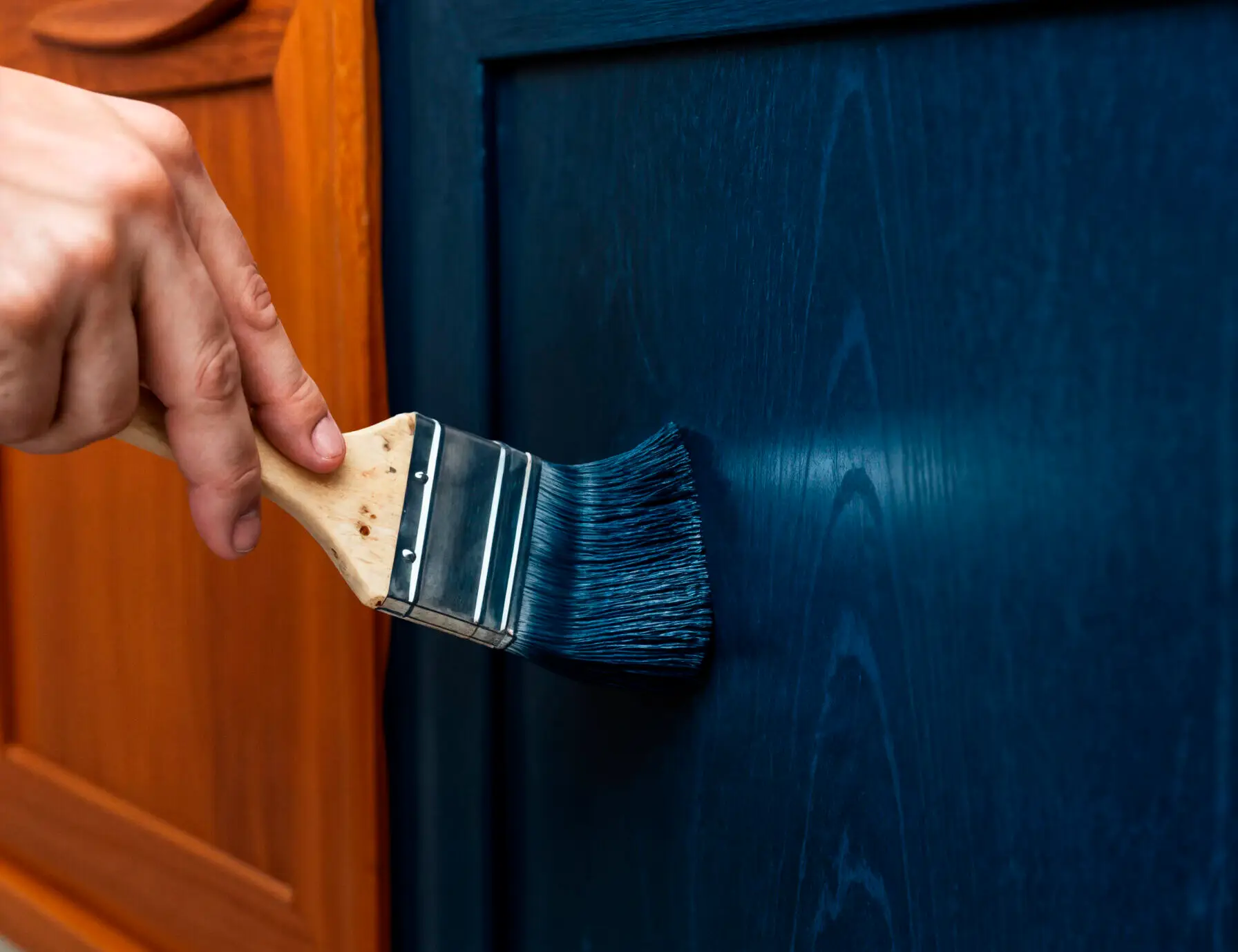
Yes, you absolutely can paint wood veneer cabinets, but the process requires far more care, specialized products, and technical precision than painting solid wood or MDF cabinets. Success hinges entirely on the preparation phase, specifically protecting the thin veneer layer and ensuring maximum adhesion.
What Are Veneer Cabinets?
Veneer cabinets are an extremely common, cost-effective, and dimensionally stable choice in modern American kitchens.
Thin Wood Layer Over Engineered Core
A wood veneer cabinet is constructed with a thin layer of real hardwood (the veneer) adhered to an engineered wood core, such as Medium-Density Fiberboard (MDF), Particleboard, or plywood. This thin layer of decorative wood—often less than 1/32 of an inch thick—provides the look and texture of solid wood while minimizing costs and preventing the warping and movement associated with solid wood cabinetry.
Why Veneer Requires Gentle Prep
The extremely thin nature of the veneer is the critical factor when preparing to paint. Unlike solid wood, which can handle deep sanding and aggressive stripping, the veneer can be easily compromised:
- Sanding Breakthrough: Even a few too many passes with a medium-grit sandpaper can quickly burn through the veneer layer, exposing the underlying core material (MDF or particleboard). This damage is nearly impossible to hide with paint and necessitates repair or replacement.
- Moisture Sensitivity: If the veneer is compromised or the edges are already loose, excessive moisture from cleaning solutions or water-based primers can penetrate and cause the core material to swell, leading to bubbles or delamination.
- Adhesion Challenge: Veneer is often sealed with tough, non-porous lacquers or polyurethanes, making it inherently resistant to paint adhesion. A standard primer will not bond reliably, making a specialized bonding agent essential.
Assessing Veneer Condition Before Painting
Before committing to a painting project, a thorough inspection of the veneer’s integrity is non-negotiable.
Loose, Peeling, or Damaged Veneer
The primary point of failure for veneer is usually around edges, corners, and areas exposed to high heat or moisture (like cabinets above a dishwasher or near the oven).
- Peeling: Look for sections where the veneer layer is separating from the core, often appearing as lifted edges or bubbles.
- Cracking/Chipping: Damage that exposes the particleboard or MDF underneath needs immediate attention.
- Water Damage: If the core material is swollen or crumbling due to water penetration, the structural integrity of that section is compromised.
Minor peeling can often be addressed by carefully injecting wood glue underneath the veneer using a syringe and clamping the section down until dry. However, extensive peeling or severe swelling in the core material usually signals a project beyond the scope of simple painting prep.
When Painting Is Not Recommended
If a cabinet door or side panel has:
- Widespread Peeling or Bubbling: The cost and labor involved in repairing multiple large sections often exceed the cost of replacing the problematic doors or applying a high-quality contact paper solution.
- Structural Damage to the Core: If the underlying MDF or particleboard is crumbling, painting will not restore its strength, and the surface will remain unstable.
In these cases, painting is a temporary fix at best, and the long-term investment would be better spent on replacement doors or refacing.
How to Paint Veneer Cabinets Safely
The key to painting veneer is minimizing physical abrasion while maximizing chemical adhesion.
Cleaning and Light Sanding Only
- Degrease Thoroughly: Start with a heavy-duty degreaser. Kitchen cabinets, especially around the stove, accumulate invisible layers of cooking grease. Use a product like Tri-Sodium Phosphate (TSP) substitute or a powerful, oil-cutting cleaner. Rinse and dry completely.
- Chemical De-Glossing: Consider a liquid sander or de-glosser. These chemicals gently soften the existing finish, promoting primer adhesion without the risk of sanding through the veneer.
- Scuff Sanding: If you must sand, use the absolute lightest touch and highest grit possible (220-grit or higher foam sanding block). The goal is only to scuff the finish, not to remove it. Focus on dulling the surface sheen, not creating dust. Stop immediately if you see the underlying core material.
Using Bonding Primers
A standard latex primer will not reliably stick to a non-porous veneer finish. You must use a primer explicitly formulated for superior adhesion.
- Shellac-Based Primers (e.g., B-I-N): These are alcohol-based, dry incredibly fast, and offer phenomenal grip on difficult, slick surfaces like laminate and cured veneer finishes. Ventilation is mandatory.
- High-Adhesion Waterborne Primers (e.g., Stix, Extreme Bond): These modern acrylic-based primers offer similar adhesion properties with a lower odor profile and easier cleanup. They stay slightly flexible and bond tenaciously to slick, non-porous surfaces.
Apply 1-2 thin coats of your chosen bonding primer, allowing full dry time between coats.
Best Paint Options for Veneer
Once the bonding primer is fully cured, the veneer is protected, and you can treat the surface like any other cabinet material.
- Cabinet Enamels/Urethanes: Use a high-quality, durable paint designed for cabinets and trim. These waterborne alkyd or acrylic-urethane hybrid paints (like Sherwin-Williams Emerald Urethane Trim Enamel or Benjamin Moore Advance) cure to a hard, durable, washable finish perfect for kitchen demands.
- Finish: Opt for a Satin or Semi-Gloss finish. These are easiest to clean and resist the wear of daily kitchen use.
Common Veneer Painting Mistakes
Avoiding these common pitfalls is the difference between a durable, professional finish and a peeling disaster.
Over-Sanding Through the Veneer
This is the most common and fatal mistake for DIY veneer projects. Once you sand through the decorative veneer layer, the highly porous and crumbly core material is exposed. Paint will absorb unevenly into this exposed core, creating a noticeable patch that cannot be repaired without extensive patching compound and re-veneering. Always use fine-grit sandpaper (220+) and only scuff the surface. Let the primer do the heavy lifting of adhesion.
Skipping Repairs Before Painting
Painting over loose or peeling veneer will not magically glue it back down. In fact, the application of primer and paint will likely exacerbate the problem by introducing moisture to the damaged edge, causing the loose section to bubble or lift further once the paint begins to dry and shrink. Any section of peeling or delamination must be secured with glue and clamped before the first coat of primer is applied.
FAQs
Will paint stick to veneer long-term?
Yes, if the proper preparation steps are followed, paint will stick to veneer long-term. The longevity relies 90% on the bonding primer. If a high-adhesion primer is applied to a perfectly cleaned, degreased, and scuff-sanded surface, the resulting paint film will be as durable as if it were applied to solid wood.
Can veneer cabinets be sprayed?
Spraying is the preferred method for painting veneer cabinets, especially if the goal is a professional, factory-smooth finish. Cabinet enamels are self-leveling, but spraying ensures a completely uniform and thin coat without brush strokes. Since the veneer surface is non-porous and smooth, it is an ideal candidate for spraying after the primer step.
Is refinishing better than painting veneer?
Refinishing (stripping the old finish and staining the wood) is only an option if the veneer is in absolutely pristine condition, without any deep scratches, gouges, or sun fading. Because veneer is so thin, you have almost no material to work with to sand out imperfections. For cabinets that are old, scratched, or heavily worn, painting is almost always the superior and more realistic choice compared to the high-risk, labor-intensive process of attempting to refinish the veneer.
Call to Action
The difference between successful cabinet painting and a project failure lies in the precise preparation and the selection of professional-grade bonding primers. Don’t risk ruining your veneer with the wrong sandpaper or primer.
For a durable, factory-smooth, and long-lasting finish on your wood veneer cabinets, trust the technical expertise of Mass Pro Painting. Contact us today for a free estimate and professional consultation.