
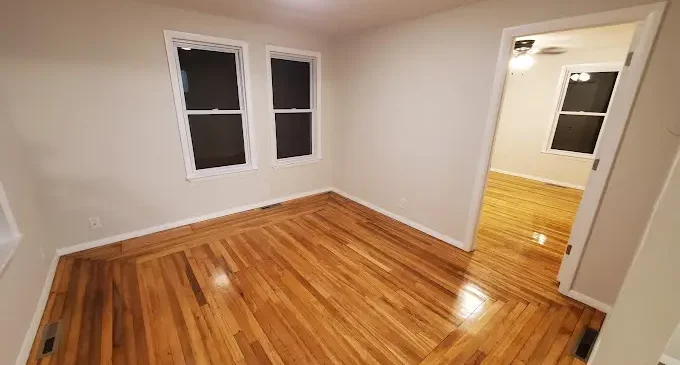
Baseboards, along with other interior trim like door and window casings, are the unsung heroes of interior design, providing a clean, finished border where the wall meets the floor. However, due to their low-to-the-ground placement, baseboards face a unique set of challenges. Choosing the right paint is crucial to ensure they remain crisp, clean, and chip-free for years.
Why Baseboards Need a Different Paint
Unlike the large, vertical surface of a wall, baseboards function as a protective barrier and a visual divider. This requires a specialized, hard-wearing finish that standard wall paint simply cannot provide.
Foot Traffic, Cleaning, and Impact Damage
Baseboards are the highest-contact, lowest-durability surfaces in a room and must withstand constant abuse:
- Impact Damage: They are frequently hit by vacuum cleaners, kids’ toys, shoes, and moving furniture, leading to chips and dents.
- Abrasion from Cleaning: They are regularly scrubbed to remove scuff marks, dust, and spills from the floor, which can quickly wear away soft wall paint.
- Moisture Exposure: Baseboards, particularly in bathrooms and kitchens, often encounter damp mops and cleaning agents, requiring a moisture-resistant seal.
- Hand and Pet Contact: The subtle transfer of oils and dirt from hands and pets accumulates at the base, necessitating a surface that is easy to wipe clean without fading or becoming tacky.
Why Wall Paint Fails on Trim
Standard interior wall paints (typically Flat, Matte, or Eggshell latex) are formulated for coverage, washability, and a soft, non-reflective appearance, but they lack the necessary components for trim:
- Lack of Hardness: Wall paints dry with a softer film that is easily marked, scratched, and chipped by physical impact.
- Poor Adhesion: Trim surfaces are often pre-primed, glossy, or made of non-porous MDF (Medium-Density Fiberboard). Standard wall paint struggles to adhere well to these slick surfaces without proper preparation, leading to peeling.
- Burnishing: Scrubbing soft wall paint to remove a scuff mark can cause the sheen to change or “burnish,” leaving a permanently noticeable shiny patch.
Best Paint Types for Baseboards
For maximum durability and a professional finish, trim requires an enamel—a paint formulated to dry to a tough, resilient, and hard finish.
Trim and Cabinet Enamel Paints
Cabinet and trim enamels are specifically engineered for adhesion to wood and MDF, exceptional leveling (reducing brush strokes), and extreme resistance to physical wear.
- High Solids Content: Quality trim paints have a higher concentration of solids (pigments and binders) compared to wall paint, resulting in a thicker, harder film that provides better protection and a smoother appearance.
- Self-Leveling Properties: This is crucial for trim. As the paint cures, it flows out to minimize brush or roller marks, leaving a smooth, glass-like finish that highlights the trim’s architectural detail.
- Block Resistance: Enamels are block-resistant, meaning painted surfaces that touch (like a door casing against a door) won’t stick together once fully cured.
Oil-Based vs. Water-Based Trim Paint
The paint base dictates application, cleanup, and long-term performance. Modern water-based technology has significantly closed the gap with traditional oil-based durability.
| Feature | Oil-Based (Alkyd) Enamels | Water-Based (Acrylic/Hybrid) Enamels |
| Durability | Excellent; hard, traditional finish. | Excellent; modern hybrids are nearly equal in hardness. |
| Application | Excellent leveling; requires mineral spirits for cleanup; strong odor. | Easy water cleanup; fast drying (can require additives to aid leveling); low VOC/odor. |
| Cure Time | Very long (7-30 days to fully cure); maximum hardness takes time. | Faster cure (7-14 days); dries to the touch quickly, allowing for quicker re-coating. |
| Color Retention | Prone to slight yellowing over time, especially in low-light areas. | Excellent non-yellowing characteristics, ideal for bright whites. |
| Maintenance | Highly durable, but prone to cracking over time due to brittleness. | Flexible, resisting cracking from wood movement; easy touch-ups. |
Modern Recommendation: For homeowners, water-based hybrid acrylic-alkyd enamels offer the best combination of professional leveling, fast dry time, low odor, and non-yellowing durability, making them the industry standard for interior trim.
Best Sheen for Baseboards
The paint sheen determines durability, light reflectivity, and ease of cleaning. A higher sheen means a harder, more durable finish.
Semi-Gloss
Semi-gloss is the most widely recommended and commonly used sheen for baseboards and trim.
- Durability and Cleanability: Its higher resin content makes it extremely hard and smooth, allowing scuff marks and dirt to be wiped clean with a damp cloth without damaging the finish.
- Visual Pop: It provides a distinct, noticeable contrast against the flatter sheen of the wall paint, which highlights the architectural detailing and gives the room a crisp, finished look.
- Hiding Imperfections (Drawback): Because it reflects light, semi-gloss is less forgiving of surface imperfections (dents, old caulk lines) than a lower sheen.
Satin vs. Gloss Comparison
| Sheen Level | Reflectivity | Durability & Feel | Typical Use Case |
| Satin | Soft, velvety glow (low to medium light reflection) | Very good; great balance of durability and minimal shine. | Often used in older homes or where a subtle, less reflective look is desired. |
| Semi-Gloss | High light reflection; noticeably shiny | Excellent; industry standard for wear and washability. | Most common choice for trim, doors, and cabinets. |
| Gloss | Very high, mirror-like reflection | Maximum durability and easiest to clean. | Primarily used in high-moisture/high-traffic areas (laundry rooms, commercial spaces) or for a dramatic, modern look. |
Color Considerations
While white remains the classic choice for trim, modern design trends offer compelling alternatives.
White vs. Matching Wall Color
- Classic White Trim (The Standard): Painting trim a crisp white (or an off-white lighter than the wall color) instantly makes the room look cleaner, brighter, and more spacious. It highlights the trim as a distinct architectural feature and offers a visual break between the floor and the wall.
- Matching Wall Color (Monochromatic Trend): A contemporary approach involves painting the baseboards, walls, and crown molding all the exact same color, often in a flat or matte finish on the wall and a satin or semi-gloss finish on the trim. This creates a sophisticated, seamless, and enveloping feel, making the room feel larger by eliminating visual breaks.
Modern Contrast Trends
- Dark Trim: For a dramatic, modern look, painting the baseboards and other trim (including door frames) in a deep, contrasting color like black, charcoal gray, or deep navy is becoming popular. This emphasizes the room’s outlines and creates a bespoke, tailored effect.
- Color-Matched Baseboard/Door: A subtle trend is to match the baseboard color to the floor color (e.g., a dark brown on a hardwood floor) but keep the door/window casings white. This makes the baseboard blend away while keeping the window and door details crisp.
FAQs
Can you use wall paint on baseboards?
While technically possible, it is strongly discouraged and will result in a finish with severely compromised durability. Wall paint, especially in lower sheens (flat or eggshell), will quickly absorb dirt and scuff marks, and repeated cleaning will lead to a patchy, burnished surface that looks worn out very quickly. Always use a dedicated trim or cabinet enamel.
How long should baseboard paint last?
A professionally applied trim paint (using a high-quality enamel and proper prep work, including priming) should easily last 5 to 10 years before needing a touch-up or full repaint. The lifespan depends heavily on the level of abuse (heavy vacuum use, pet contact) and the quality of the paint; premium enamels can last much longer.
Is gloss too shiny for trim?
“Gloss” (High-Gloss) can indeed be too shiny for typical residential trim. Its mirror-like reflectivity can emphasize every small imperfection in the wood or installation, creating a distracting surface. Semi-Gloss is usually the perfect balance: it’s shiny enough to be highly durable and easy to clean, but not so reflective that it highlights every flaw. High-Gloss is best reserved for modern, flawless trim or high-traffic commercial spaces.
Ready to get a flawless, durable finish on your baseboards?
Shop now to find the perfect water-based trim enamel and semi-gloss sheen for your next home improvement project!