
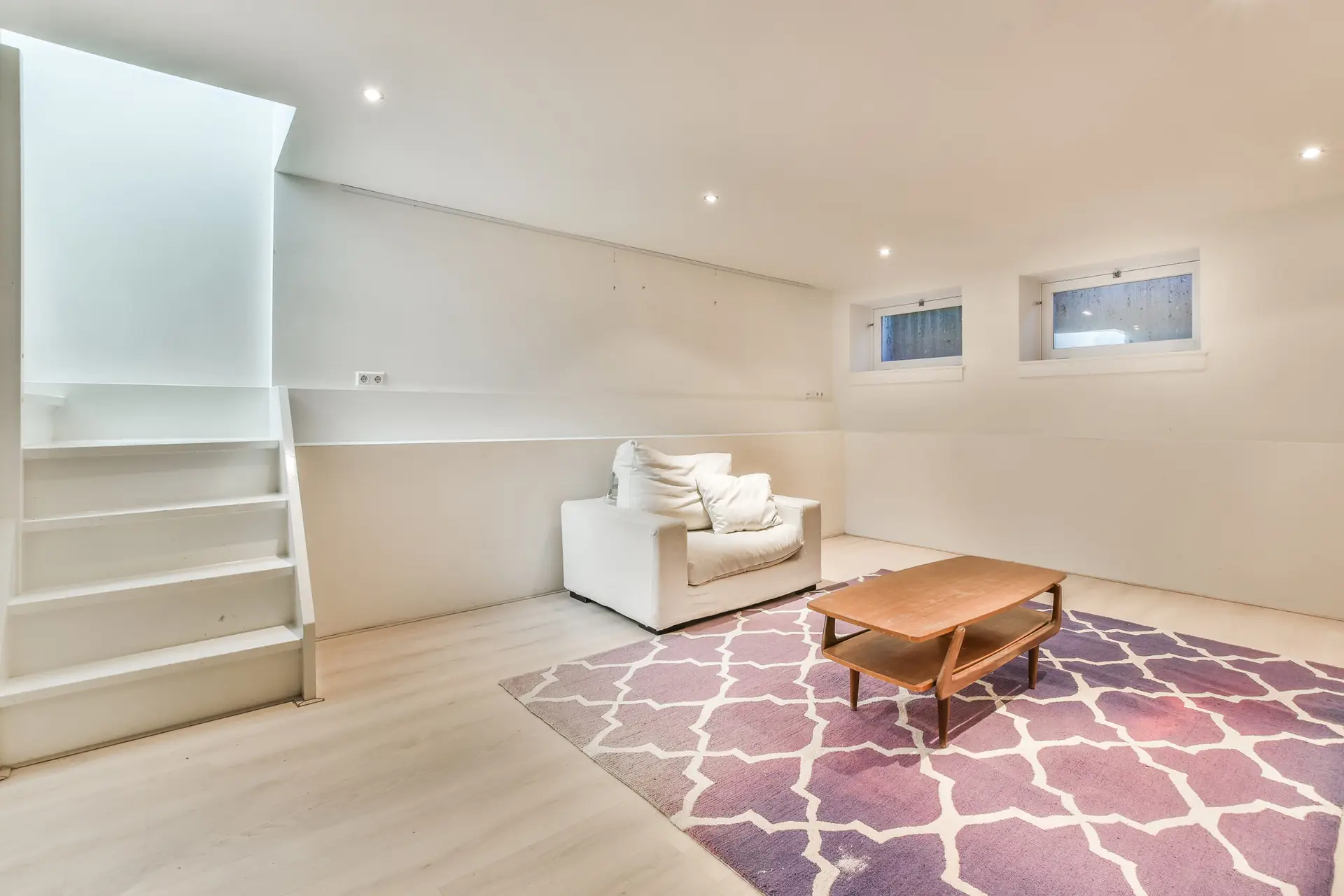
The basement presents a unique decorating challenge: how do you transform a space that often lacks natural light and is prone to moisture into a welcoming living area? The answer lies not just in the color you choose, but in understanding how that color interacts with artificial light and the specific conditions of a sub-grade room.
How Lighting Affects Basement Paint Colors
In a basement, $90\%$ of the illumination comes from artificial sources. This makes the Light Reflectance Value (LRV) and the undertones of your chosen paint critically important.
Choosing Hues for Low-Light Spaces
The most functional role of paint in a basement is to maximize the small amount of light available.
- Light Reflectance Value (LRV): LRV is a measurement, expressed as a percentage, of how much light a color reflects. A true black has an LRV near $0$, while a pure white is near $100$. For basements, professional designers generally recommend colors with an LRV above $50$. These lighter hues bounce the light from your fixtures around the room, making it feel less cave-like.
- The Trap of Deep Colors: While deep jewel tones (like emerald or burgundy) can create a sophisticated, cozy media room feel, they absorb light heavily. If you choose a color with an LRV below $30$, you must compensate with an abundance of high-quality, layered artificial lighting (recessed lights, floor lamps, and sconces).
- Creating Uniformity: By painting the trim, walls, and ceiling in closely related shades, you reduce sharp visual breaks, allowing the eye to travel seamlessly and enhancing the feeling of space.
Importance of Undertones in Artificial Light
Artificial light, especially LED and fluorescent sources, can drastically alter the way a color’s subtle undertones appear.
- Cool Light (Daylight/Blue): LED lights with a high Kelvin temperature ($4000\text{K}-6000\text{K}$) have a blue cast. This can make warm neutrals (like beige or yellow-based grays) look drab, muddy, or even slightly green. It will, however, make cool blues and purples look crisp and vivid.
- Warm Light (Soft White/Yellow): Lights with a low Kelvin temperature ($2700\text{K}-3000\text{K}$) mimic incandescent light. They are excellent for promoting a cozy feel, but they can make true, clean whites look excessively yellow or creamy. This temperature is ideal for enhancing the warmth in greige or taupe colors.
Pro Tip: Always paint large swatches (at least $2\text{ ft} \times 2\text{ ft}$) on the basement walls and observe them at different times of the day, with only the intended permanent light fixtures turned on.
Top Basement Color Trends
The current trends focus on creating transitional spaces that don’t feel separate from the main level of the home.
Warm Neutrals for a Cozy Feel
Warm neutrals are the cornerstone of a comforting basement design, as they counteract the inherent coolness of the concrete.
- Greige: The quintessential basement color, greige blends gray (cool) and beige (warm). It provides the sophistication of gray without the sterile, cold feeling that pure gray can sometimes introduce. Greige is highly versatile and complements both dark wood furniture and bright, contemporary art.
- Soft Taupe: A deeper version of greige with stronger brown or purple undertones. Taupe works well in basements intended as libraries, dens, or home offices, offering a grounding and intimate atmosphere.
- Creamy Beige: Not the yellowing beige of the $90$s, but modern, refined beige with subtle pink or peach undertones. This color makes a room feel instantly sun-washed, even without windows.
Soft Whites and Greys for Brightness
When maximizing light is the top priority, soft, reflective colors are the best solution.
- Crisp, High-LRV White: For a modern, minimalist, or gallery aesthetic, a clean white (LRV $85$ and above) is unbeatable. Use this color if your basement is intended as a home gym, yoga studio, or contemporary living space. Ensure your lighting temperature is correct ($3500\text{K}-4000\text{K}$) to prevent it from looking dingy.
- Silver and Dove Gray: These are light grays that look almost white but add just enough contrast against white trim to feel airy and structured. They are often perceived as cooler hues, making them ideal for small basements, as cool colors tend to recede visually.
Bold Accent Walls for Character
An accent wall is a powerful tool to introduce color and shape a long, rectangular basement space.
- Creating Depth: Paint the farthest, longest wall a deep, bold color (e.g., deep charcoal, navy, or black). This accent color anchors the room and, surprisingly, makes the space feel longer and draws the eye forward, giving the illusion of depth.
- Defining Zones: If your basement is open-concept (media area, play zone, bar), use different, complementary accent colors (or patterns, like stripes) to visually segment the space without needing full walls or dividers.
Tips for Painting a Basement
Due to the concrete substrate and potential for condensation, basement paint requires specific material considerations.
Use Moisture-Resistant Paints
Standard interior latex paint can fail quickly in a basement environment due to efflorescence (white, powdery mineral deposits) or moisture vapor transmission.
- Acrylic Masonry Paint: For concrete or cinder block walls, use a $100\%$ acrylic or elastomeric masonry paint. These paints are more flexible and “breathable” than traditional latex, allowing small amounts of trapped moisture vapor to escape without bubbling the paint film.
- Waterproofers: If you are certain your walls have active, seeping leaks, use a specialty hydraulic cement or an epoxy-based, cementitious waterproofing paint (often white) as the first layer before applying any decorative color.
Matte vs. Satin Finishes for Best Results
The sheen of the paint affects both light reflection and washability.
- Matte/Flat Finish: Recommended for Walls. A flat finish absorbs light and hides surface imperfections (like uneven drywall seams, minor cracking, or rough cinder block) better than any other sheen. This contributes to a softer, cozier feel.
- Satin Finish: Recommended for Trim and High-Traffic Zones. Satin has a slight gloss, making it far easier to clean and wipe down. Use it on baseboards, door frames, and in high-moisture areas like laundry rooms or utility closets where durability is key.
Designer Favorites for 2025
Designers are moving away from stark whites and toward sophisticated, grounded colors that feel warm and restorative.
Greige, Sage Green, and Navy Blue Combinations
- The Greige Base: Use a neutral, mid-tone greige on three walls as the primary color. It provides a contemporary backdrop that pairs effortlessly with any furniture style.
- The Sage Green Accent: Apply a muted, dusty sage green to the fourth, main accent wall. Sage is earthy and restful, acting like a neutral while still providing a subtle pop of organic color. It creates a calming feel perfect for a home office or relaxation zone.
- Navy Blue in Zones: Use a rich, dark navy blue (or deep teal) on built-in shelving, cabinetry (like a wet bar), or a bathroom vanity. The navy adds a punch of drama and sophistication that is balanced by the calming greige and sage.
FAQs
Should basement ceilings be painted white?
Generally, yes. Painting the ceiling a crisp white ($100\%$ lighter than the walls) creates the illusion of height and is the most effective way to reflect maximum light.
However, for an industrial or urban loft look, a deep, matte charcoal or black is highly recommended. This strategy works by making exposed ductwork, piping, and wiring disappear into the dark background, creating a clean, high-end industrial aesthetic.
What’s the best color for small basements?
The best colors for small basements are light, cool neutrals (like pale sky blue, light silver-gray, or an off-white with blue undertones). These colors visually expand the space by making the walls appear to recede.
Key Trick: For small rooms, paint the trim one shade lighter than the walls, rather than a stark, high-contrast white. Low-contrast transitions make the space feel seamless and larger.