
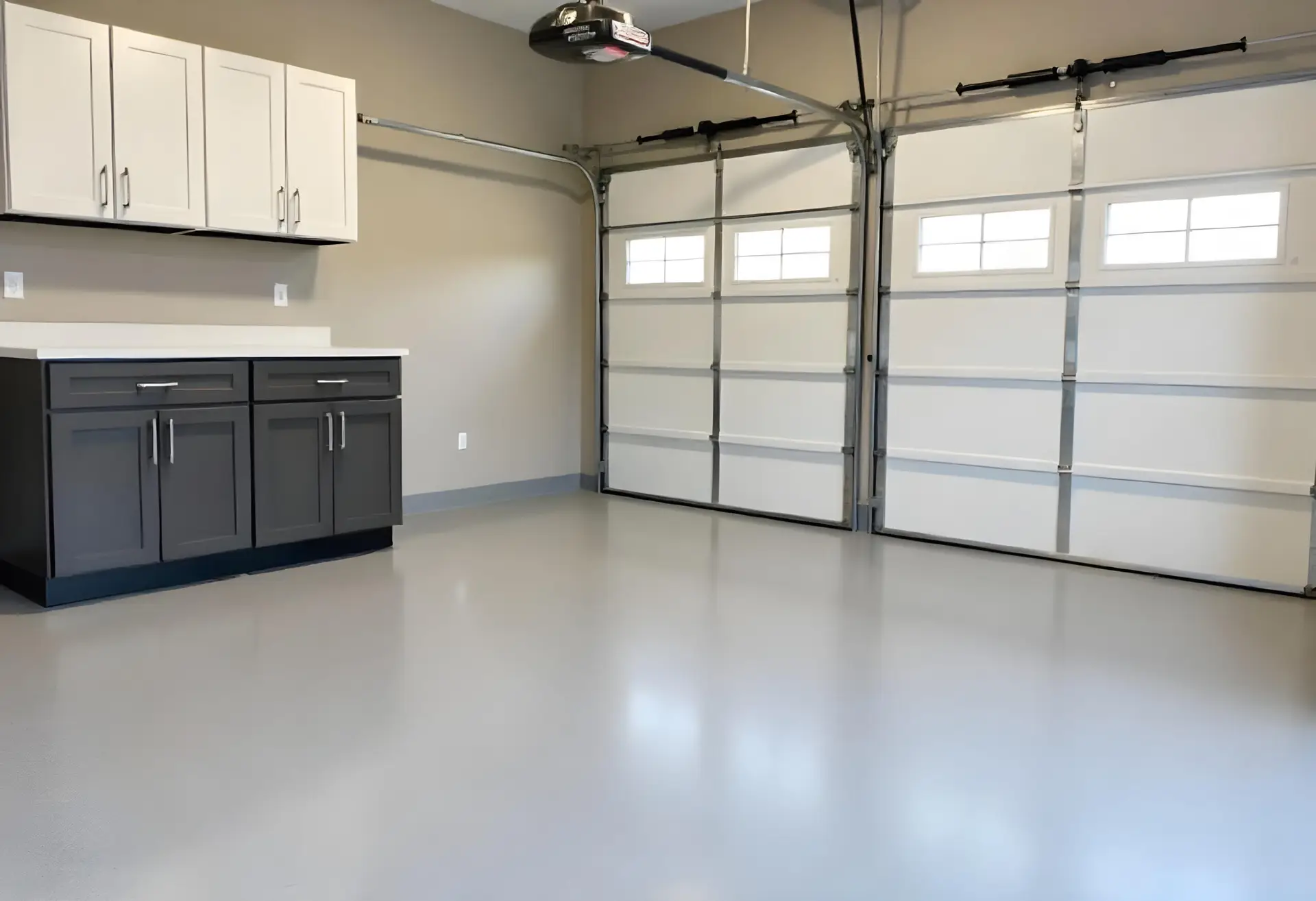
Choosing the right paint for your garage floor can significantly impact its durability, appearance, and ease of maintenance. With various options available, it’s essential to understand the characteristics of each to make an informed decision that suits your garage’s specific needs and your budget. This guide will help you navigate the choices, highlighting key factors and breaking down the most popular types of garage floor coatings.
Factors to consider when choosing garage floor paint
Before diving into specific paint types, consider these crucial factors to narrow down your options:
- Traffic Level:
- Light Traffic: If your garage is primarily for storage or light hobbies, a less durable (and less expensive) option might suffice.
- Medium Traffic: Daily vehicle parking, occasional DIY projects. Most residential garages fall into this category.
- Heavy Traffic: Multiple vehicles, frequent heavy equipment use, professional workshops. This demands the most robust coatings.
- Existing Floor Condition:
- New Concrete: Requires proper curing time (at least 28 days) and etching before painting.
- Old/Damaged Concrete: Will need extensive cleaning, degreasing, crack repair, and possibly grinding to ensure proper adhesion.
- Moisture Issues: If your concrete has significant moisture coming up from beneath (perform a moisture test), no paint will adhere long-term. Address moisture problems first.
- Desired Durability and Lifespan: How long do you want the coating to last? Are you looking for a short-term refresh or a long-term protective solution?
- Resistance Needs:
- Hot Tire Pickup: The tendency for hot tires to lift paint off the floor. Crucial for any garage where vehicles are parked.
- Chemical Spills: Resistance to oil, gasoline, antifreeze, brake fluid, and other common garage chemicals.
- Abrasion Resistance: How well the paint stands up to scratches, scuffs, and impacts from tools or dropped items.
- Application Difficulty & Time: Some coatings are easier for DIYers, while others require more skill, specialized tools, and precise timing. Consider the “pot life” (working time) for multi-part systems.
- Cost: Prices vary widely, from economical latex paints to premium 2-part epoxy systems. Factor in the cost of primer, sealer, and any repair materials.
- Aesthetics: What kind of finish do you want? Glossy, satin, matte? Do you want to add decorative flakes or anti-slip additives?
- Drying & Curing Time: How long can you keep your garage empty and off-limits before resuming normal use? This can range from days to weeks for full curing.
Epoxy garage floor paint: Pros & cons
Epoxy coatings are the most popular and generally recommended choice for garage floors due to their superior performance.
1. 2-Part Epoxy (Water-Based or 100% Solids)
This is the most durable and long-lasting option. It consists of a resin and a hardener that are mixed together, initiating a chemical reaction that creates a very tough, thermosetting plastic finish.
Pros:
- Exceptional Durability: Highly resistant to abrasion, impact, and chipping.
- Excellent Hot Tire Resistance: Far superior to latex paints, preventing the common problem of paint lifting.
- Superior Chemical Resistance: Withstands oil, gasoline, antifreeze, and most common garage chemicals.
- Easy to Clean: Non-porous, smooth surface makes spills easy to wipe up.
- Aesthetic Appeal: Provides a professional, glossy finish. Can be enhanced with color flakes.
- Long Lifespan: Can last 10-20 years or more with proper application and maintenance.
Cons:
- Higher Cost: More expensive than latex or 1-part epoxy.
- Challenging Application: Requires precise mixing and works quickly due to a limited “pot life” (working time). Less forgiving of mistakes.
- Strong Fumes: Can emit strong odors, requiring excellent ventilation.
- Extensive Prep Required: Absolute necessity for thorough cleaning, degreasing, and etching.
- Long Curing Time: While dry to touch quickly, full curing for vehicle traffic can take 7 days or more.
- Slippery When Wet: Can be slippery, especially with a glossy finish. Anti-slip additives are highly recommended.
2. 1-Part Epoxy (Epoxy Acrylic or Epoxy Enamel)
These are essentially advanced latex paints with a small amount of epoxy added for increased durability over standard acrylic. They are easier to use than 2-part epoxies.
Pros:
- Easier to Apply: No mixing required, similar to applying regular paint.
- Water-Based: Easier cleanup with water.
- Better Durability than Latex: More resistant to wear and tear than plain latex concrete paint.
- Lower Cost: More affordable than 2-part epoxy.
Cons:
- Limited Durability: Still susceptible to hot tire pickup, chipping, and chemical staining over time, especially in active garages.
- Shorter Lifespan: Will likely require re-coating more frequently than 2-part epoxy.
- Not a True Epoxy: Does not offer the same level of protection as a true 2-part epoxy system.
Latex garage floor paint: Pros & cons
Latex (acrylic) concrete paint is the most basic and economical option.
Pros:
- Least Expensive: Most budget-friendly choice.
- Easiest Application: No mixing, very forgiving to apply.
- Water-Based: Easy cleanup with water.
- Low Odor: Fewer fumes compared to epoxy.
- Quick Drying: Generally dries faster than epoxy.
Cons:
- Lowest Durability: Prone to hot tire pickup, chipping, peeling, and scratching.
- Poor Chemical Resistance: Not resistant to oil, gasoline, or other garage chemicals, leading to stains.
- Shorter Lifespan: Will need frequent re-coating, especially in active garages.
- Not Recommended for Vehicle Traffic: Will break down quickly under the stress of tires.
Overall: While attractive for its low cost and ease of use, latex paint is generally not recommended for garage floors that see regular vehicle traffic or heavy use. It’s better suited for light-duty areas like storage rooms or utility spaces.
Polyurethane options for extra durability
While typically not used as a standalone base coat, polyurethane coatings are often applied as a topcoat over epoxy for added protection and performance.
Pros:
- Enhanced Abrasion Resistance: Polyurethane is extremely tough, making it even more resistant to scratches and scuffs than epoxy alone.
- UV Resistance: Many polyurethanes offer excellent UV stability, preventing yellowing over time, which can be an issue with some epoxies exposed to sunlight.
- Chemical Resistance: Further enhances resistance to a wide range of chemicals.
- Improved Sheen Retention: Helps maintain the gloss or satin finish of the underlying epoxy.
- Can Offer Non-Slip Properties: Some polyurethane topcoats come with or can have anti-slip additives mixed in.
Cons:
- Adds Cost: An additional layer means more material and labor costs.
- Requires Epoxy Base: Cannot be applied directly to bare concrete as a primary protective layer; it’s a topcoat.
- Application Complexity: Often a 2-part system, requiring careful mixing and application.
When to Consider Polyurethane: If you’re looking for the absolute maximum durability, chemical resistance, and UV protection for your garage floor, especially in a high-traffic or brightly lit garage, applying a polyurethane topcoat over a 2-part epoxy system is an excellent upgrade.
Tips for picking the best paint for your garage needs
Making the final decision requires weighing your priorities. Here are some tips:
- Assess Your Garage’s Purpose:
- Parking Cars Regularly? Go with a 2-part epoxy. Period. Anything less will disappoint.
- Light Storage/Occasional Use? A quality 1-part epoxy might suffice, but understand it’s a compromise.
- Workshop/Heavy Use? A 2-part epoxy, possibly with a polyurethane topcoat, is your best bet.
- Don’t Skimp on Prep: No matter what paint you choose, thorough surface preparation is paramount. The best paint in the world will fail if applied to a dirty, greasy, or improperly etched floor.
- Perform a Moisture Test: This simple test (taping plastic to the floor) can save you a lot of headache. If you have significant moisture issues, address them before painting.
- Consider Anti-Slip Additives: Garage floors can be slippery when wet, especially with a glossy finish. Additives are inexpensive and can prevent accidents.
- Calculate Your Budget: Factor in all costs: primer, paint/epoxy kit, sealer (if used), decorative flakes, anti-slip, cleaning supplies, tools (rollers, brushes), and repair materials.
- Read Reviews: Look for products with consistently positive reviews from other homeowners who have applied them in similar garage environments.
- Buy Enough: Always buy slightly more paint than you calculate you’ll need. It’s better to have a little extra for touch-ups than to run out mid-project.
- Patience is a Virtue: Allow adequate drying and curing times. Rushing the process will compromise the finish and its longevity.
By carefully considering these factors and understanding the properties of each paint type, you can confidently choose the best garage floor paint to create a durable, attractive, and long-lasting finish that meets all your needs.
Ready to transform your garage? Take these tips, evaluate your options, and get ready for a floor that stands up to anything!