
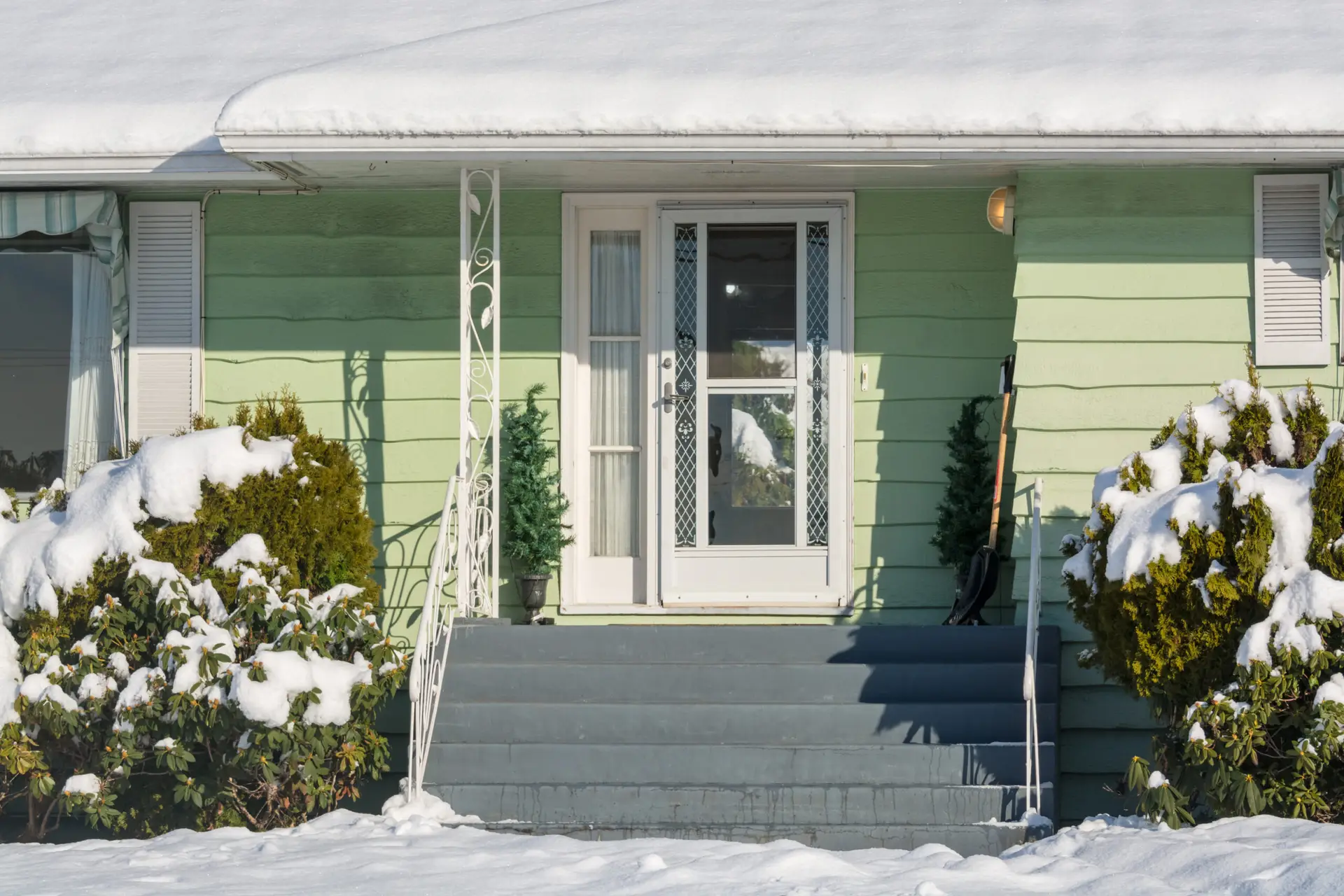
While spring and summer offer the most ideal conditions for exterior painting, professional painters can successfully execute projects during the winter months, especially in regions with milder climates. Success relies entirely on understanding paint chemistry and strictly adhering to manufacturer temperature guidelines.
The key to painting in winter is choosing the right day, the right time, and most importantly, the right materials.
Challenges of Painting in Cold Weather
Cold temperatures don’t just make the painter uncomfortable; they fundamentally alter how paint behaves, adheres, and cures.
Slower Drying Times and Paint Adhesion Issues
Paint requires heat to undergo the critical drying and curing phases:
- Latex Paint: Water-based (latex) paints dry through a two-stage process: water evaporation and coalescence (the process where the acrylic particles fuse together to form a continuous, durable film). When temperatures drop, both processes slow dramatically. If the temperature falls below the minimum threshold before coalescence is complete, the particles won’t fuse properly, resulting in a weak, soft film that will peel or wash off quickly.
- Oil-Based Paint: Oil-based paints cure through oxidation (a chemical reaction with oxygen). Cold temperatures increase the viscosity of the paint, making it harder to apply evenly and significantly extending the cure time, leaving the surface vulnerable to dust and moisture for longer.
Temperature and Humidity Concerns
The two greatest risks in cold-weather painting are related to moisture and sustained low temperatures:
- Sustained Low Temperature: Most paint needs to stay above the minimum recommended temperature for at least 48 to 72 hours after application. A temperature spike during the day followed by a deep freeze at night can ruin the curing process of newly applied paint.
- Dew Point and Condensation: The dew point is the temperature at which air becomes saturated and condensation (dew or frost) forms. Painting a surface when its temperature is near or below the dew point means that moisture will form on the surface, preventing proper adhesion and potentially leading to blistering. Even a dry-looking surface can be compromised by invisible moisture.
Ideal Conditions for Exterior Painting
Professionals follow strict guidelines to mitigate the risks associated with colder weather.
Minimum Temperatures for Latex vs. Oil-Based Paints
| Paint Type | Minimum Application Temperature | Critical Curing Temperature |
| Traditional Latex | $50^{\circ}$F and rising | Must stay above $45^{\circ}$F for 48 hours |
| Low-Temp Acrylics | $35^{\circ}$F and rising | Must stay above $35^{\circ}$F for 48 hours |
| Oil-Based | $40^{\circ}$F and rising | Must stay above $35^{\circ}$F for 24 hours |
Note: These are general guidelines. Always consult the specific manufacturer’s technical data sheet for the product being used.
Best Time of Day for Outdoor Painting
In the winter, the window for safe painting is significantly narrowed:
- Start Late: Never start painting first thing in the morning. Wait until the sun has been up for a few hours, the ambient temperature is well above the minimum threshold, and any morning dew or frost has completely evaporated.
- Follow the Sun: Professionals typically paint the sections of the house that are in the direct path of the sun. This provides localized warmth to the substrate.
- End Early: Stop painting at least 2-3 hours before the sun begins to set. This gives the paint ample time to partially cure before the temperature drops and dew or frost begins to form in the evening.
Best Paints for Cold Weather
Modern paint technology has made winter painting possible, but only with the right specialized products.
Low-Temperature Acrylic Paints
For cold-weather application, the best choice is a high-quality, $100\%$ acrylic latex paint specifically engineered for low temperatures (often called “low-temp” or “cold-weather” formulas).
- These paints use specialized additives and polymers that allow the paint particles to fuse (coalesce) at lower ambient temperatures—often down to $35^{\circ}$F—without compromising film integrity.
- They maintain exceptional flexibility, which is crucial for wood and siding that expands and contracts heavily in fluctuating winter temperatures.
Specialized Primers for Exterior Surfaces
Priming is always critical, but even more so in cold weather.
- High-Solids Primers: Using high-quality primers with a high percentage of solids is recommended. These primers build a thicker, more durable base layer that bonds well to the substrate and helps insulate it slightly against minor temperature fluctuations.
- Appropriate Chemistry: Ensure the primer matches the surface (e.g., masonry primer for stucco, wood primer for wood, etc.) and is compatible with cold-weather application and the acrylic topcoat.
Professional Tips for Winter Painting
Mass Pro Painting takes extra steps to ensure that cold-weather applications meet the highest standards of durability.
Keep Surfaces Dry and Clean
The single most critical factor is a dry surface. Professionals will use moisture meters to confirm the substrate’s moisture content is within safe limits (usually below $15-18\%$ for wood).
- No Ice or Frost: Painting over frost or ice (even a thin, invisible layer) will guarantee paint failure, as the paint will not adhere to the frozen surface. Surfaces must be bone-dry.
- Cleanliness: Ensure the surface is free of dirt, loose debris, or mildew, as contaminants compromise adhesion, which is already a struggle in the cold.
Use Heaters or Enclosures When Needed
For small, critical areas (like trim, doors, or windows) or when temperatures briefly dip, professional teams use localized solutions:
- Tent and Heat: Temporary plastic sheeting can be used to create localized enclosures or “tents” around the painting area.
- Propane Heaters: Non-combustion heat sources (like electric or indirect-fired propane heaters) can be used to gently warm the air and the substrate temperature inside the tent, bringing the surface well above the minimum required for application and curing. This technique is typically used for small sections only.
FAQs
Can you paint if it’s below $40^{\circ}$F?
Yes, but only with specific low-temperature acrylic latex paints. While the majority of standard paints require $50^{\circ}$F or higher, modern formulas are rated for temperatures as low as $35^{\circ}$F. However, even with these specialized paints, the temperature must be rising during application, and it must stay above $35^{\circ}$F for the duration of the critical cure time (48+ hours).
Is winter painting covered by warranty?
A professional painting contractor’s warranty will typically cover workmanship and application flaws. However, nearly all paint product warranties and professional service warranties require adherence to the paint manufacturer’s temperature specifications. If paint failure is determined to be a result of application below the product’s minimum temperature threshold, the warranty may be void. This is why professionals like Mass Pro Painting document temperatures and use specialized equipment to guarantee compliance.
Don’t Let Winter Delay Your Home Improvement. Trust the Experts.
Winter painting requires an intimate knowledge of temperature, humidity, and paint chemistry. When done correctly by professionals, it provides the same durable finish as a summer job.
Mass Pro Painting is equipped with the specialized low-temperature materials and technical expertise required to ensure a successful, lasting exterior finish, regardless of the season.
Contact Mass Pro Painting today to discuss your off-season exterior painting project and secure your free estimate.