
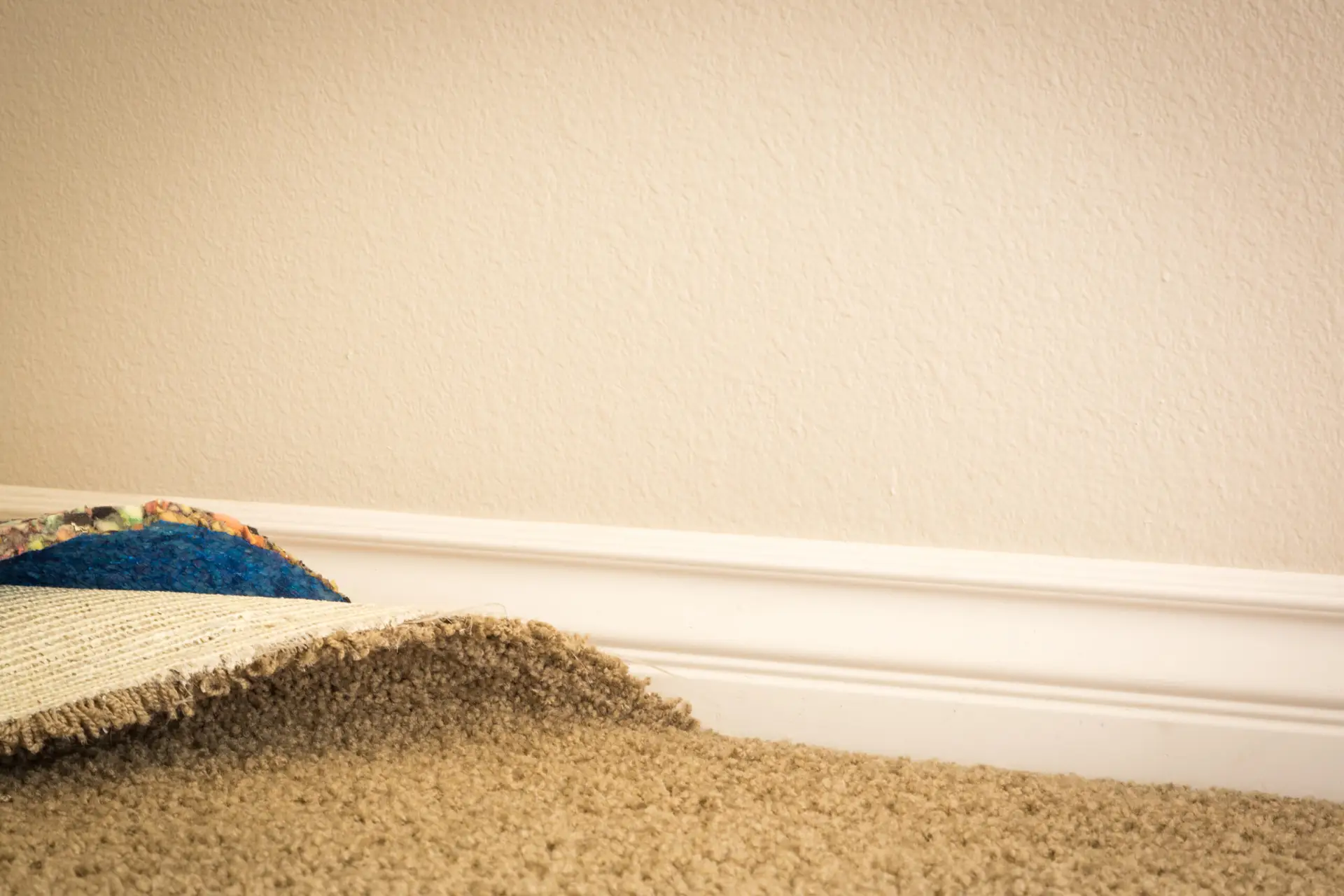
Painting baseboards offers a powerful way to freshen up a room, but the process becomes significantly trickier when carpet is present. The risk of paint bleeding onto the fabric or staining fibers is high, demanding meticulous preparation and precise technique. This guide outlines the best strategies for achieving a clean, professional finish without damaging your carpet.
The Challenge of Painting Trim Near Carpet
Carpet complicates trim painting because, unlike hard flooring, it is porous, often extends slightly up the baseboard, and is difficult to clean once stained.
Paint Bleed and Carpet Staining Risks
The main risks when painting baseboards next to carpet stem from the fuzzy texture and slight gap between the trim and the floor covering:
- Capillary Action: When paint is applied too heavily near the bottom edge, the fabric fibers of the carpet can wick the wet paint upward, a process known as capillary action, leading to stains that seep deep into the pile.
- Uneven Gaps: Carpets are not perfectly flat. The slight variations in the carpet’s thickness or the presence of a tack strip gap can create crevices that are impossible to seal perfectly with tape, allowing drips to fall straight onto the padding or visible fibers.
- Accidental Brush Contact: Even a slight, unintentional flick of the paintbrush while cutting in along the bottom edge can embed paint into the carpet’s fibers, especially if the carpet is light-colored.
Why Rushed Prep Causes Damage
The golden rule for painting trim near carpet is: The time you save on preparation, you will spend tenfold trying to clean up paint drips. Rushing the prep leads to common, irreversible mistakes:
- Improper Taping: Not pushing the painter’s tape deep enough or using cheap tape allows paint to seep under the edge.
- Forgetting to Vacuum: Dust and debris caught between the baseboard and carpet can lift the tape, creating channels for the paint to flow.
- Skipping the Drop Cloth: While tape protects the edge, a drop cloth is essential to catch accidental splatters or brush shakes that occur higher up on the baseboard.
Best Ways to Protect Carpet
Effective protection requires a multi-layered approach, addressing both the immediate edge and the broader area.
Painter’s Tape Techniques
While standard painter’s tape (blue or green) can be used, the technique is critical:
- Clean the Edge: Vacuum thoroughly along the baseboard to remove all dust and lint.
- Lift the Carpet: Use a wide, flexible putty knife or a 5-in-1 tool to gently push the edge of the carpet down and away from the baseboard, exposing the subfloor or tack strip edge.
- Apply Tape Under the Trim: Lay the painter’s tape directly onto the subfloor under the baseboard edge, ensuring the carpet fibers do not overlap the tape.
- Press and Seal: Run a blunt tool (like a coin, plastic scraper, or the edge of the putty knife) along the top edge of the tape to press it firmly against the baseboard, creating an impenetrable seal.
Using a Carpet Shield or Putty Knife
For experienced painters or when tackling long, straight sections, a manual shield is often faster and more effective than tape.
- The Carpet Shield: A thin, flexible piece of metal or rigid plastic (often sold as a painter’s shield) is placed on the carpet, parallel to the baseboard. You paint against the shield’s edge, creating a clean line. After painting a section, you carefully lift and move the shield to the next area.
- The Putty Knife Method: A wide, flexible-bladed putty knife (4-inch to 6-inch) can be used as a simple shield. Slide the knife blade gently under the lip of the baseboard, pressing the carpet down. As you paint the bottom edge, the knife acts as a barrier, preventing paint contact. You slide it along the wall as you progress. This is often the preferred method, as it allows you to get a seamless paint line right down to the floor without needing to wait for tape adhesive to set.
Drop Cloth Placement
A common mistake is using a thin plastic drop cloth.
- Use Canvas or Heavy Cloth: Choose a heavy canvas drop cloth. It absorbs paint drips rather than allowing them to pool and potentially track onto unprotected areas.
- Secure Coverage: Ensure the drop cloth completely covers the carpet area extending out at least 3-4 feet from the baseboard, especially where you will set down your paint can or tray.
Painting Techniques That Reduce Mess
Preparation is half the battle; the other half is technique.
Brush Size and Control
Using the right tool for the job minimizes the risk of accidental drips and contact.
- The Best Brush: A high-quality, angled sash brush (typically 2-inch or 2.5-inch) is ideal. The angled bristles allow for precise “cutting in” against the wall and the floor, providing maximum control.
- Load Management: Do not overload your brush. Dip the brush about one-third of the way into the paint and gently tap off the excess against the inside of the can. A well-loaded brush carries enough paint for a clean, controlled stroke without being heavy enough to drip.
- Steady Hand: Always use your non-dominant hand to steady your dominant (painting) hand. Anchor your wrist or forearm against the wall or floor to stabilize your brush movement, especially when painting the bottom edge.
Working in Small Sections
Avoid applying long, continuous beads of paint, which increases the risk of drips and uneven coverage.
- The “W” Technique: Apply paint to the middle of the baseboard first, using a small “W” or zigzag pattern.
- Feather the Edges: Smooth the paint out horizontally, feathering the edges as you go.
- The Final Pass (Cutting In): Only after the majority of the surface is covered, reload your brush lightly and make a clean, continuous stroke along the bottom edge, using your carpet shield or tape for guidance.
- Immediate Inspection: Check the freshly painted section for any drips or heavy spots immediately before moving to the next section.
When to Hire a Professional
While painting baseboards is a manageable DIY project, certain conditions make hiring a pro a wise investment.
Tight Spaces and Light-Colored Carpet
- Stairwells and Hallways: These areas have minimal room to maneuver, increasing the likelihood of accidental contact with walls or carpet.
- High-End or Light-Colored Carpet: If your carpet is expensive, custom-colored, or very light (e.g., cream, pale gray), any paint stain—even a tiny one—will be highly noticeable and difficult to repair. Professionals carry liability insurance and specialized tools that guarantee a clean result.
Full Interior Repaint Projects
If you are painting walls, ceilings, doors, and all the trim throughout an entire home, the sheer volume of meticulous prep work required for the baseboards can be overwhelming. A professional crew can complete the job faster and with a superior, uniform finish across all surfaces, saving you days of tedious, back-breaking work.
FAQs
Can paint be removed from carpet if it drips?
Yes, but success depends on the type of paint and speed.
- Wet Latex/Acrylic Paint: Dab immediately with a clean, damp cloth. Do not rub, as this pushes the paint deeper into the fibers. You can also try a solution of warm water and dish soap.
- Dried Latex/Acrylic Paint: This is harder. Use a solvent specifically designed for latex paint removal, or try carefully scraping the top layer with a knife, followed by dabbing with rubbing alcohol.
- Oil-Based Paint: Requires specialized mineral spirits or paint thinner. Always test the solvent in an inconspicuous spot on the carpet first to ensure it doesn’t damage the carpet’s color or backing.
Is it better to replace baseboards first?
Absolutely. If your carpet is being replaced, or if the baseboards themselves are severely damaged, warped, or being upgraded, it is always easier to:
- Remove old baseboards.
- Replace the carpet (or hard flooring).
- Install new, pre-primed baseboards.
- Paint the new baseboards before installing them, or paint them immediately after installation but before furniture is moved back in.
Should baseboards be painted before carpet?
Yes, if possible. The ideal sequence when renovating a room is to paint all the trim (and walls) after any subfloor preparation is complete, but before the new carpet is installed. This allows you to paint the baseboards all the way down to the subfloor without worrying about drips, resulting in a cleaner line and faster work. The carpet installers will then tuck the carpet right up to the newly painted, dry baseboards.
Don’t let carpet stress ruin your perfect trim paint job.
Explore our range of painting tools, putty knives, and precision angled brushes to master the art of painting baseboards near carpet today!