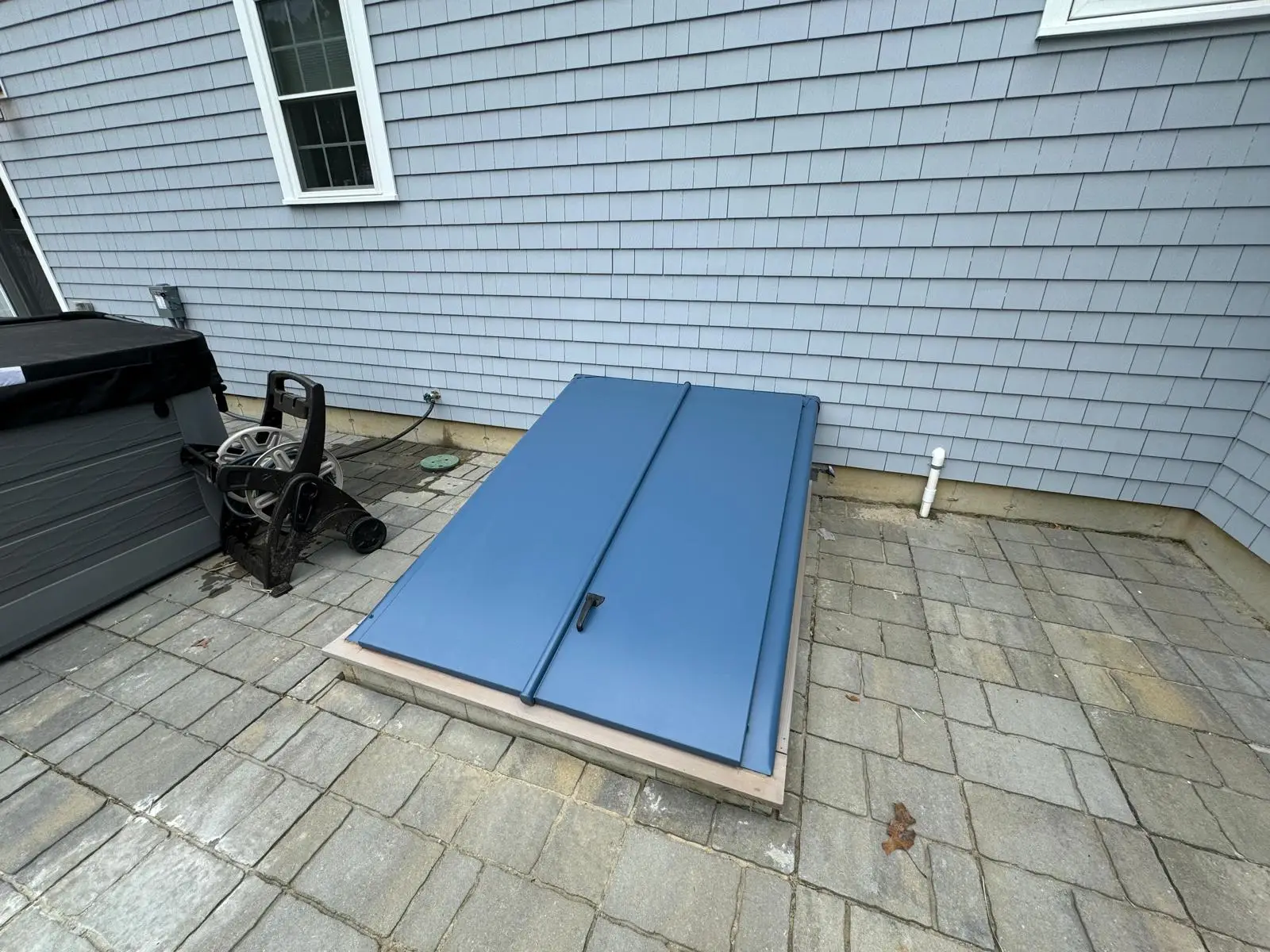
A bulkhead door (or cellar door) is a critical exterior element of many homes in Massachusetts, providing access to basements and protecting against the elements. Often made of steel or galvanized metal, these doors are constantly exposed to moisture, rust, and harsh weather. Painting them not only improves curb appeal but, more importantly, provides crucial protection against corrosion and deterioration, ensuring a durable exterior finish.
Clean & prep: remove rust, degrease, sand
Proper preparation is the most critical step to ensure paint adhesion and longevity on a bulkhead door.
- Clear Area: Remove any debris, leaves, or dirt around the bulkhead.
- Safety First: Wear heavy-duty gloves, safety glasses, and a dust mask.
- Remove Loose Paint & Rust:
- Use a wire brush, sandpaper (medium to coarse grit, e.g., 80-120 grit), a sanding block, or even a power sander (with caution) to remove all loose, peeling, or flaking paint and rust. Get down to bare metal where corrosion is present.
- For heavily rusted areas, a wire wheel attachment on a drill or grinder can be effective, but use with extreme care.
- Degrease and Clean:
- Wash the entire bulkhead door thoroughly with a heavy-duty degreaser or a strong detergent solution (e.g., TSP substitute mixed with water). This removes grease, oil, dirt, and any remaining chalky residue.
- Scrub well, especially in corners and seams.
- Rinse completely with a garden hose until no suds or residue remain.
- Dry Thoroughly: Allow the door to dry completely. This can take several hours in good weather. Ensure there is no trapped moisture, especially in crevices, before proceeding. You can use a leaf blower or fan to speed up drying.
- Light Scuff Sand (Optional but Recommended): Even on areas with intact old paint, a light sanding with fine-grit sandpaper (220 grit) will scuff the surface, creating a “tooth” for better primer adhesion.
Prime: red-oxide or metal-etch primer
Priming is essential for metal bulkhead doors to prevent rust and ensure paint adhesion.
- For Rusted/Bare Metal: Use a high-quality rust-inhibiting primer such as a red-oxide primer or a metal-etch primer.
- Red-Oxide Primer: Contains rust-inhibiting pigments. Excellent for bare or lightly rusted steel.
- Metal-Etch Primer: Chemically etches the metal surface, creating superior adhesion. Often used for galvanized metal or very smooth surfaces.
- For Previously Painted/Intact Surfaces (with light sanding): An all-purpose exterior metal primer or a bonding primer designed for metal can also work.
- Application: Apply the primer evenly with a brush or roller. Ensure good coverage, especially in all seams and edges. Allow the primer to dry completely according to manufacturer instructions (typically several hours).
Topcoat: use oil-based enamel or exterior metal paint
For a durable and long-lasting finish, choose a paint specifically formulated for exterior metal.
- Oil-Based Enamel Paint:
- Pros: Historically known for superior hardness, durability, and resistance to abrasion and impact. Excellent adhesion to properly primed metal. Provides a smooth, hard finish.
- Cons: Longer drying times, strong fumes (require good ventilation), harder cleanup (mineral spirits), can yellow over time, less flexible than acrylics.
- 100% Acrylic Exterior Metal Paint (Water-Based):
- Pros: Excellent flexibility (resists cracking/peeling as metal expands and contracts), faster drying times, low VOCs, easy water cleanup, good color retention, generally more resistant to mildew. Modern acrylics are very durable.
- Cons: May not have the extreme hardness of traditional oil-based enamels, though advances have made them very comparable.
- Recommendation: For most DIYers, a high-quality 100% acrylic exterior metal paint is often the easiest to work with and provides excellent results. If you prefer the traditional hardness and are comfortable with oil-based products, an oil-based enamel is a solid choice.
- Finish: A semi-gloss or high-gloss finish is usually recommended for bulkhead doors. These finishes are more durable, easier to clean, and offer better protection against moisture.
- Color: Consider a color that matches your home’s trim, foundation, or roof for a cohesive look. Darker colors tend to blend in better with foundations.
Weather & temperature requirements (>35 °F)
- Temperature: Most exterior paints and primers require application when temperatures are above 35°F (2°C), and ideally between 50-90°F (10-32°C). Crucially, the temperature should remain above the minimum for at least 24-48 hours after application to allow for proper curing.
- Humidity: Avoid painting in high humidity, which slows drying times.
- Rain: Ensure no rain is expected for at least 24-48 hours after painting to prevent wash-off or blistering.
- Direct Sun: Avoid painting in direct hot sun, as this can cause the paint to dry too quickly, leading to brush marks or poor adhesion. Work in shaded areas if possible.
Tools: spray vs brush & roller options
- Brush:
- Pros: Best for cutting in, getting into tight corners, seams, and working paint into any texture. Provides good control. Use a high-quality synthetic brush for acrylics, natural bristle for oil-based.
- Cons: Slower, can show brush marks.
- Roller:
- Pros: Faster for larger, flat sections. Use a small roller (e.g., 4-6 inch) with a short nap (1/4 or 3/8 inch) for smooth metal.
- Cons: May not get into all crevices.
- Spraying (HVLP or Airless):
- Pros: Fastest method, provides the smoothest, most uniform finish with no brush marks.
- Cons: Requires significant masking of surrounding areas, specialized equipment, and skill. High risk of overspray.
- Recommendation: For most DIYers, a combination of brush and roller is practical. Use the brush for edges, seams, and detail work, and the roller for the larger flat panels.
- Application: Apply two thin, even coats of topcoat. Allow adequate drying time between coats (check manufacturer’s instructions).
Maintenance tips & estimated project cost
- Maintenance:
- Regular Cleaning: Periodically clean your bulkhead door with mild soap and water to remove dirt, debris, and pollutants.
- Inspect Annually: Check for any chips, scratches, or signs of rust annually.
- Prompt Touch-Ups: Address any small areas of rust or paint failure immediately. Sand, prime, and touch up to prevent the problem from spreading.
- Estimated Project Cost (DIY):
- Materials: (Primer, Paint, Brushes/Rollers, Sandpaper, Degreaser, Tape): $50 – $150.
- Time: 4-8 hours (including prep and drying time between coats).
- Hiring a Professional: For a truly flawless and long-lasting finish, especially if the door is heavily rusted or damaged, consider hiring a professional painter. Their expertise in prep and application can prevent premature failure and ensure maximum protection.
Mass Pro Painting offers professional exterior painting services for all aspects of your Massachusetts home, including durable and protective finishes for bulkhead doors. Our meticulous preparation and high-quality paint application ensure your basement access is not only protected but also enhances your home’s curb appeal.