
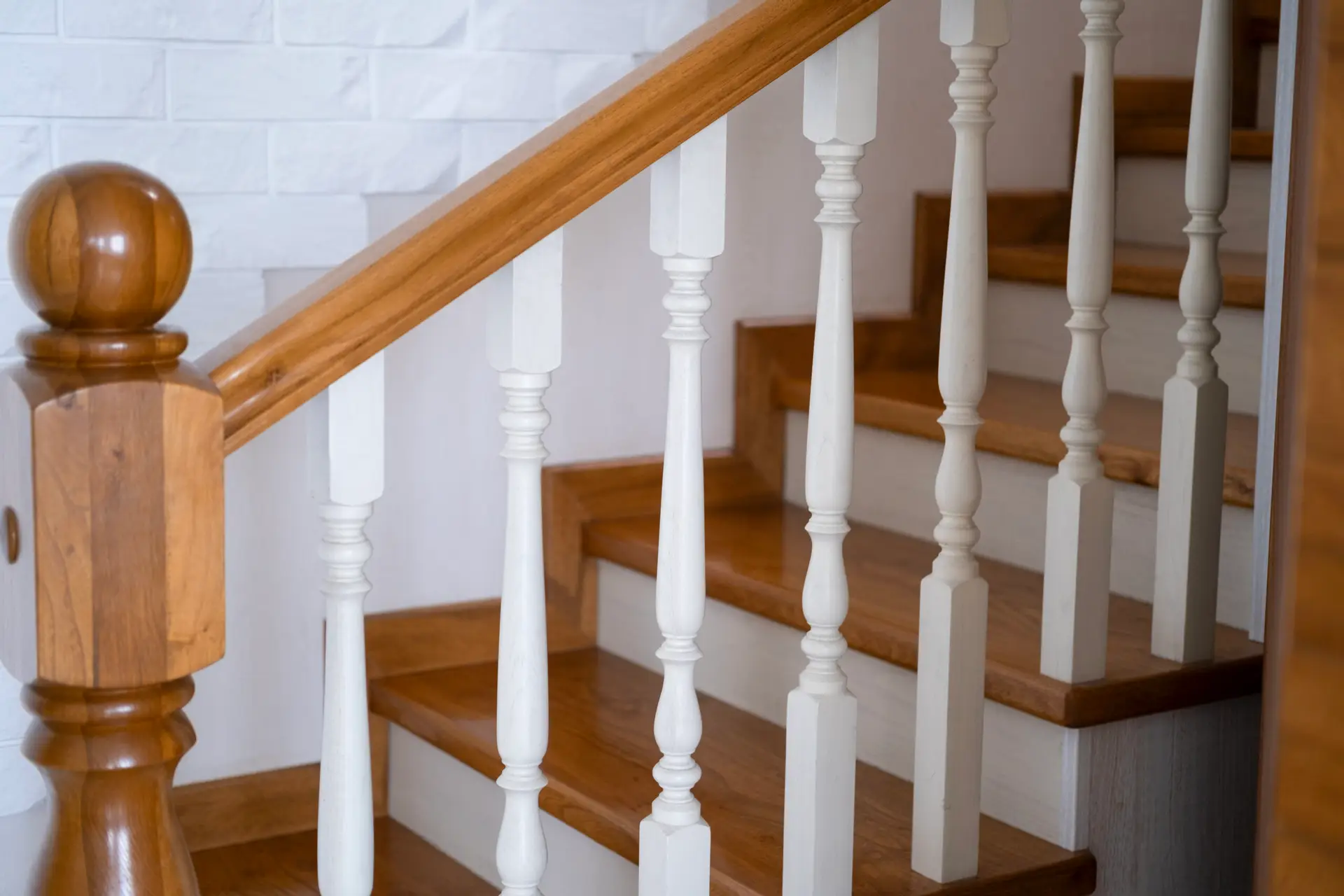
A fresh coat of paint can turn a worn-out stair railing into a stunning focal point, but it’s a project that requires careful preparation and the right technique. A poorly painted railing can peel, chip, and look sloppy, especially in a high-traffic area. By following this step-by-step guide, you can ensure a professional-quality finish that is both beautiful and durable.
Tools and Materials You’ll Need
Before you start, gather all your supplies to ensure a smooth, uninterrupted process.
Sandpaper and Primer
- Sandpaper: You’ll need a variety of grits, from a medium-coarse grit (around 120-150) for scuffing and a fine grit (220-320) for a final smooth finish.
- Primer: A high-quality primer is essential, especially if you’re painting over a stained or varnished surface. Look for a stain-blocking or bonding primer.
Brushes and Rollers
- Brushes: A high-quality angled brush (1.5-2 inches) is best for getting into the spindles and tight corners.
- Rollers: A small foam roller can be used for flat surfaces on the top rail or posts.
Painter’s Tape and Drop Cloths
- Painter’s Tape: Use a high-quality painter’s tape to protect any areas you don’t want to paint, such as the walls, steps, and floor.
- Drop Cloths: Cover the entire staircase and surrounding floor area with drop cloths to protect them from paint drips and spills.
Prepping the Railing
This is the most time-consuming but crucial part of the process. Do not skip or rush these steps.
Sanding and Cleaning
- Remove Old Finish: Lightly sand the entire railing, spindles, and posts with a medium-grit sandpaper. The goal is not to remove all the old finish, but to scuff up the surface to give the primer something to adhere to.
- Clean Thoroughly: After sanding, use a vacuum with a brush attachment to remove all the dust. Then, wipe the entire surface with a tack cloth or a damp cloth to get any remaining fine dust particles. Make sure the surface is completely dry before moving on.
Applying Primer
- Tape Off: Carefully apply painter’s tape to the baseboards, walls, and any other areas you need to protect.
- Apply Primer: Apply a thin, even coat of your chosen primer to the entire railing. Pay close attention to getting good coverage on all the spindles and hard-to-reach areas.
- Sand Again: Once the primer is dry, lightly sand the entire surface with a fine-grit sandpaper (around 220) to create a perfectly smooth surface for your paint. Wipe down the surface with a tack cloth one more time.
Painting Step-by-Step
Choosing the Right Paint Finish
For a high-traffic area like a stair railing, a semi-gloss or satin finish is highly recommended. These finishes are more durable and easier to clean than a matte or flat finish. A good quality acrylic-alkyd hybrid enamel is also a great choice for its durability and smooth finish.
Applying Even Coats
- Start at the Top: Begin painting from the top of the railing and work your way down to the bottom. This helps you avoid dripping paint onto areas you’ve already completed.
- Paint in Sections: Work on one spindle or one section of the handrail at a time, applying thin, even coats. Avoid thick, heavy coats, as they can drip and leave brush marks.
- Long, Smooth Strokes: Use long, smooth strokes with your angled brush, following the grain of the wood. This will give you a professional, streak-free finish.
Drying and Second Coats
Allow the first coat of paint to dry completely according to the manufacturer’s instructions, which can be anywhere from 4 to 24 hours. Once dry, you can apply a second coat. A second coat is essential for durability and a deep, rich color.
Finishing Touches
Sealing for Durability
While a good quality enamel paint is durable on its own, you can add an extra layer of protection by applying a clear topcoat. A water-based polyurethane can provide a hard, protective shell, especially on the handrail.
Cleaning Up Edges
Once your paint is completely dry, carefully remove the painter’s tape. If there are any stray marks, a damp cloth or a small amount of mineral spirits on a cotton swab can be used to clean them up.
FAQs
Can I paint without sanding?
While you might be tempted to skip sanding, it’s not recommended. Without proper sanding, the paint will not adhere well, and it will be prone to chipping and peeling, especially in a high-traffic area like a railing.
How long should I wait before using the railing?
Even if the paint feels dry to the touch, it needs time to cure and harden. This can take several days to a week, depending on the paint type and humidity levels. Check the paint can for a “full cure” time. It’s best to avoid using the railing for at least 48 hours and be very gentle with it for the first week to prevent damage.
Ready to transform your staircase but don’t want the hassle? Mass Pro Painting specializes in professional interior painting and delivers flawless results. Contact us today for a free estimate!