Repainting a metal door, typically made of steel or aluminum, requires a different approach than wood or fiberglass. Because metal expands and contracts with temperature changes and is susceptible to rust, the success of the paint job hinges almost entirely on meticulous preparation and the selection of the correct rust-inhibiting primer and flexible topcoat.
Why Metal Doors Need Proper Preparation
Preparation on a metal surface is not just about aesthetics; it’s about forming an airtight, waterproof seal that protects the structural integrity of the door.
Preventing Rust and Peeling Paint
- Rust (Corrosion): If moisture reaches bare steel, oxidation begins immediately. If a rust spot is simply painted over, the rust will continue to grow beneath the paint film, causing bubbles, flaking, and eventual structural failure. A chemical bond via primer is the only way to stop this.
- Peeling Paint: Metal surfaces are non-porous and slick. Without proper sanding, the new paint lacks the “tooth” required to grip the surface, leading to premature peeling and failure, particularly along edges and high-impact areas.
Ensuring Long-Lasting Adhesion
The preparation steps ensure maximum adhesion between the metal substrate, the primer, and the topcoat. The entire system must work together to flex slightly as the door heats up in the summer sun and cools in the winter. Good adhesion is the foundation of this durable system.
Prepping a Metal Door for Repainting
The preparation phase is the most labor-intensive but critical step. Do not skip or rush this stage.
1. Remove Old Paint, Sand, and Clean
- Remove Hardware: The easiest way to achieve a professional finish is to remove the door from the hinges and remove all hardware (knobs, locks, peepholes). Place the door on sawhorses in a well-ventilated area. If removing the door is not feasible, mask off all hardware with high-quality painter’s tape.
- Clean: Scrub the entire door with a grease-cutting cleaner or TSP substitute to remove dirt, oil, and grime. Rinse well and allow to dry fully.
- Remove Loose Paint: Use a wire brush or scraper to remove any flaking or peeling paint.
- Sand: Using $120$- to $180$-grit sandpaper, lightly sand the entire surface to scuff the old paint. For bare metal or deep scratches, start with $80$-grit and then move to $120$-grit. Wipe off all sanding dust with a tack cloth or a damp microfiber towel.
2. Repair Dents and Prime the Surface
- Repair Dents: For small dents or imperfections, use Bondo or an automotive-grade filler. Apply the filler, allow it to cure fully, and then sand it smooth until it is perfectly flush with the surrounding surface.
- Prime: This is the most important step for metal. Apply one coat of rust-inhibiting primer (detailed below). The primer seals the metal, prevents corrosion, and provides a uniform surface for the topcoat. Pay special attention to any areas of bare metal, ensuring they receive complete coverage.
Choosing the Right Paint
Metal requires a paint system—primer and topcoat—that specifically addresses corrosion protection and thermal expansion.
Rust-Resistant Primer and Exterior-Grade Enamel
- Primer (Mandatory): For exterior steel doors, you must use a direct-to-metal (DTM) or corrosion-inhibiting primer. Zinc-chromate and alkyd rust-inhibiting primers are excellent choices for ensuring a strong bond and fighting corrosion.
- Topcoat (Enamel): The topcoat should be an exterior-grade enamel. Enamels provide a hard, durable, and highly weather-resistant shell. Look for a satin or semi-gloss sheen, as these are the most durable and easiest to clean. Flat paints can hold moisture and dirt, reducing the life of the finish.
Oil-Based vs. Water-Based Finishes
| Feature | Water-Based (Latex/Acrylic) Enamel | Oil-Based (Alkyd) Enamel |
| Durability | Excellent, flexible, resists cracking. | Superior hardness, resists scratches and chipping. |
| Clean-Up | Easy, requires only soap and water. | Requires mineral spirits. |
| Odor/VOCs | Low odor, low VOCs. | High odor, high VOCs. |
| Drying/Curing | Dries quickly, but full cure takes weeks. | Dries slowly (higher “open time”), which helps reduce brush marks. |
Recommendation: For the best balance of durability and easy application, use a high-quality $100\%$ acrylic latex enamel over a high-performance alkyd DTM primer. The acrylic topcoat is more flexible and less likely to yellow over time than a full oil-based system.
Painting Process
The goal is to apply thin, continuous layers. Thick coats sag, run, and take too long to cure.
1. Apply Thin, Even Coats
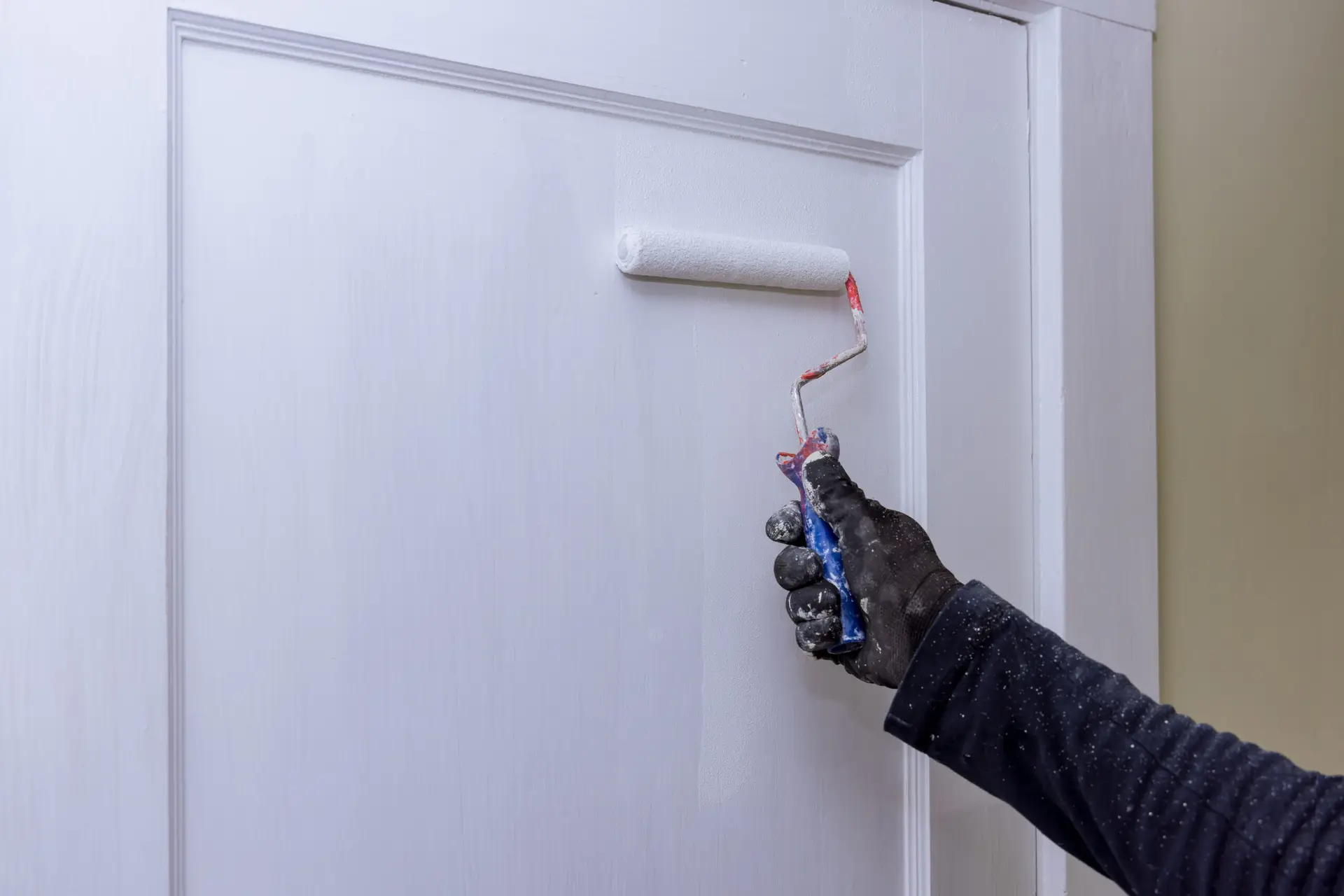
- Application Tool: The best finish is achieved using a combination of a $2$-inch synthetic angle brush (for recessed panels and edges) and a high-density foam roller (for the flat surfaces).
- Technique: Roll the paint onto the flat surfaces using light pressure. Immediately “lay off” the paint by running the roller across the surface in one long, light, continuous stroke from top to bottom. This minimizes air bubbles and roller texture.
- Recessed Doors: Always paint the recessed areas/edges first with the brush, and immediately paint the flat panels with the roller before the brushed paint starts drying. This helps the paint blend seamlessly.
2. Let Each Coat Cure Before Applying the Next
- Drying vs. Curing: Drying means the surface is dry to the touch (usually a few hours). Curing means the paint has achieved its maximum hardness (which can take days or weeks).
- Recoat Time: Strictly follow the recoat time listed on the paint can (usually $4$ to $8$ hours). Applying the next coat too early will dissolve and lift the previous coat, destroying the smooth finish.
- Final Coat: Always apply at least two topcoats of the enamel paint for full color saturation and maximum film build.
FAQs
Can I paint over rusted areas?
No, you should never paint directly over active rust. You must first treat the rust.
- Remove: Use a wire brush or sandpaper to scrape away all loose, flaking rust.
- Treat: Apply a rust converter product to the remaining rusted metal. These products chemically convert the rust (iron oxide) into a stable, black, paintable surface.
- Prime: Once the converter is cured, prime the area with your DTM primer before proceeding with the topcoat.
How long does metal door paint last?
A professional job, using the correct primer and two coats of quality exterior-grade enamel, should last between $8$ to $12$ years. Longevity depends primarily on the quality of the preparation, the harshness of the weather (especially direct sun exposure), and how well the paint quality holds up against UV radiation and thermal cycling.