
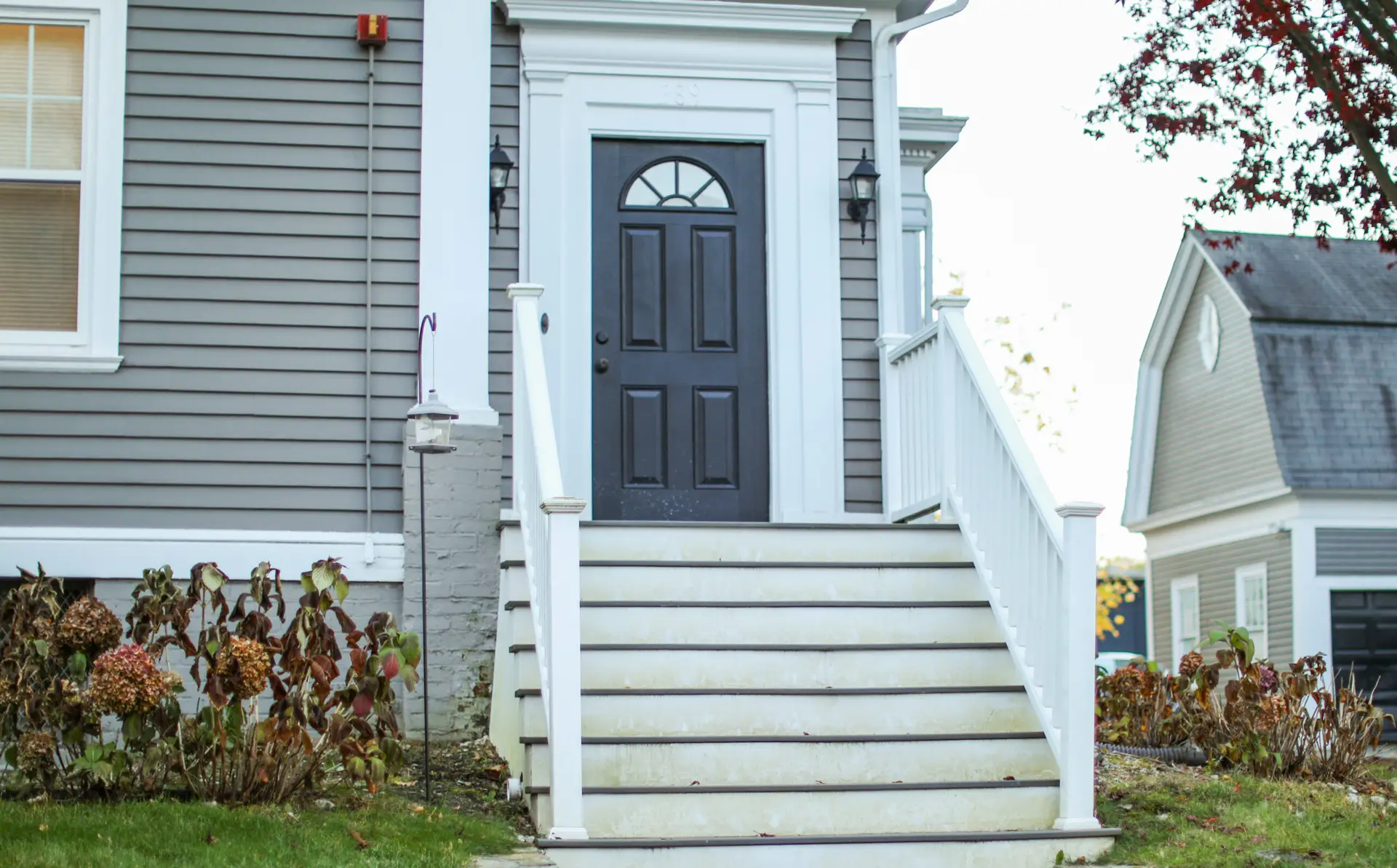
A front door is more than just an entryway; it’s a focal point, a statement piece that reflects your home’s personality and sets the tone for visitors. While bold and vibrant colors are popular, a classic black front door has an undeniable allure. It’s a choice that exudes sophistication and drama, but it comes with its own set of considerations.
Pros: timeless elegance, strong contrast, curb appeal
- Timeless Elegance & Sophistication: Black is a classic. It never goes out of style and immediately elevates the perceived value and sophistication of a home. It’s elegant, formal, and conveys a sense of traditional grandeur.
- Strong Contrast & Definition: A black door provides a striking contrast against lighter exterior colors (white, cream, light grey, stone, brick). This contrast makes the entry pop, drawing the eye and clearly defining the entrance of your home.
- Enhances Curb Appeal: For many home styles, a black front door instantly boosts curb appeal, making the home look sharper, more intentional, and well-maintained. It’s a bold yet safe choice for resale value.
- Versatility: Black pairs well with almost any other color on your exterior – from white siding and red brick to natural stone. It works with various architectural styles, from colonial and traditional to modern and contemporary.
- Hides Dirt: Unlike lighter colors, black is excellent at hiding everyday dirt, smudges, and minor scuffs, making it a low-maintenance option for appearance between cleanings.
Cons: heat absorption, fading, possible wood damage
- Heat Absorption: This is the biggest drawback. Black absorbs significantly more solar radiation than lighter colors. In sunny climates (even in Massachusetts during summer), a black door can become very hot to the touch.
- Fading: Due to high heat absorption, black paint can fade more quickly than lighter colors, especially on doors with direct, prolonged sun exposure. This might require more frequent repainting or touch-ups to maintain its deep color.
- Possible Wood Damage/Warping (for wood doors): Excessive heat absorption can cause underlying wood doors to expand and contract more drastically, potentially leading to warping, cracking, or premature deterioration of the wood and the paint film itself.
- Energy Efficiency: A hot black door can transfer heat into your home, potentially increasing cooling costs in summer.
Style vs climate: when black works best
- Best Climates: Black doors perform best in:
- Moderate Climates: Where extreme heat is not a constant issue.
- Shaded Entries: If your front door is protected by an overhang, porch, or mature trees, it will be less exposed to direct sun and heat.
- North-Facing Doors: These typically receive less direct sunlight and are less prone to excessive heat absorption.
- Best Home Styles: Black doors are exceptionally suited for:
- Traditional, Colonial, Georgian, and Craftsman homes for a classic, dignified look.
- Modern and Contemporary homes for a sleek, minimalist, or dramatic statement.
- Homes with light-colored siding (white, light grey, cream) or natural materials like brick and stone.
Feng Shui & color psychology considerations
- Color Psychology: Black often symbolizes power, sophistication, mystery, and formality. It can project a sense of stability and protection.
- Feng Shui: In Feng Shui, the color of your front door is significant.
- North-Facing Door: Black is excellent for a North-facing door, as North corresponds to the water element, which is associated with black and dark blue. It can attract good fortune and opportunities.
- South-Facing Door: Black is generally not recommended for a South-facing door, as South corresponds to the fire element. Black (water) can “quench” the fire, potentially dampening energy.
- East/Southeast-Facing Door: Can be acceptable, as wood element doors (East/Southeast) can be nourished by water (black).
- West/Northwest-Facing Door: Generally not recommended, as metal element doors (West/Northwest) can be weakened by water (black).
- Consultation: If Feng Shui is a significant consideration, consult with a practitioner.
Alternatives: deep reds, plums, navy, to soften boldness
If the concerns about black are too great, or you want a slightly softer yet still bold look, consider these alternatives:
- Deep Charcoal Grey: Offers similar sophistication to black but with less heat absorption.
- Deep Reds (Barn Red, Burgundy, Cranberry): Classic, inviting, and vibrant without the heat issues of black.
- Deep Plums/Eggplant: Luxurious and unique, offering depth and warmth.
- Navy Blue: A timeless, elegant, and versatile alternative that provides a strong contrast without being as intense as black.
- Dark Forest Green: A rich, earthy option that provides sophistication and connects to nature.
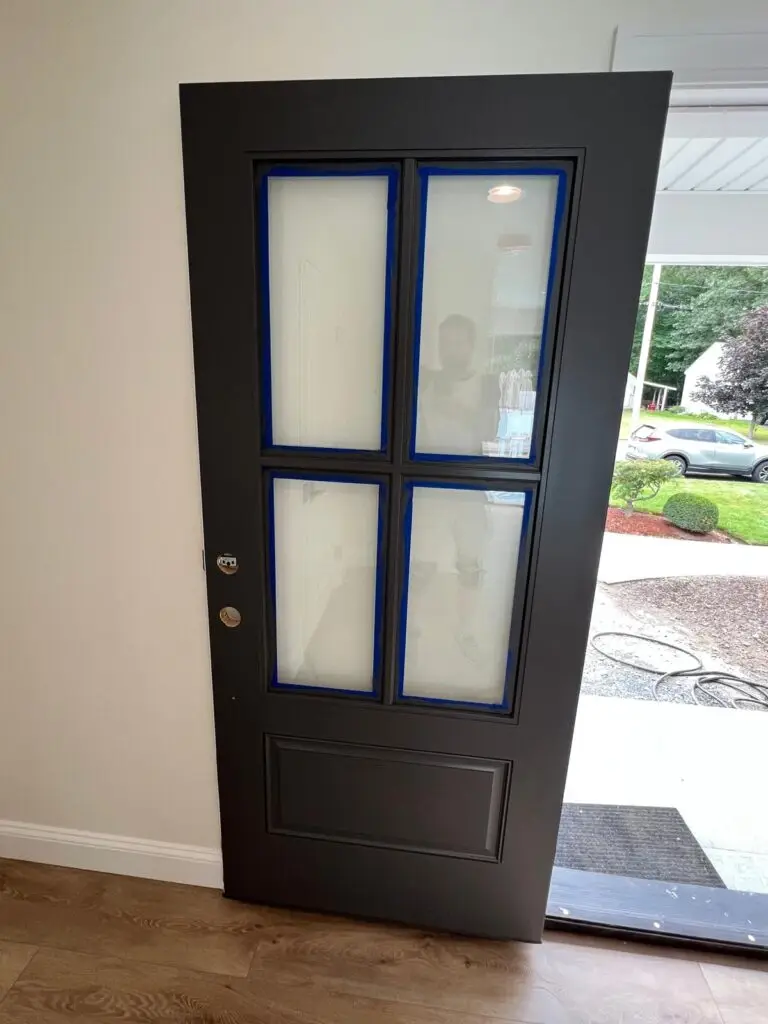
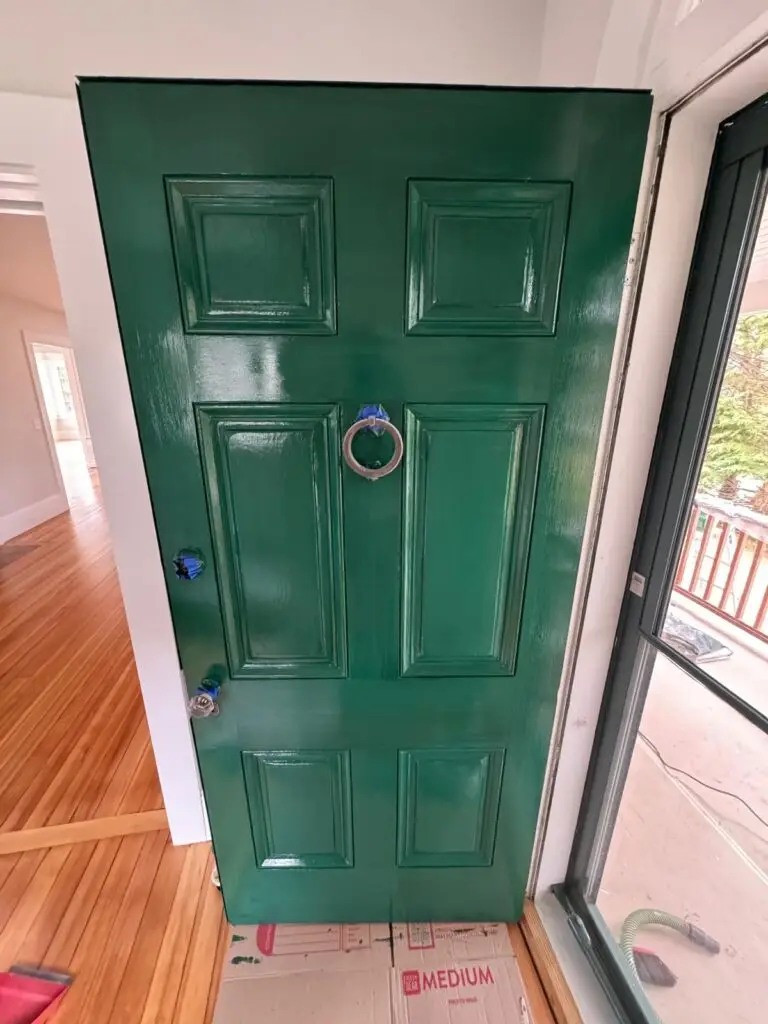
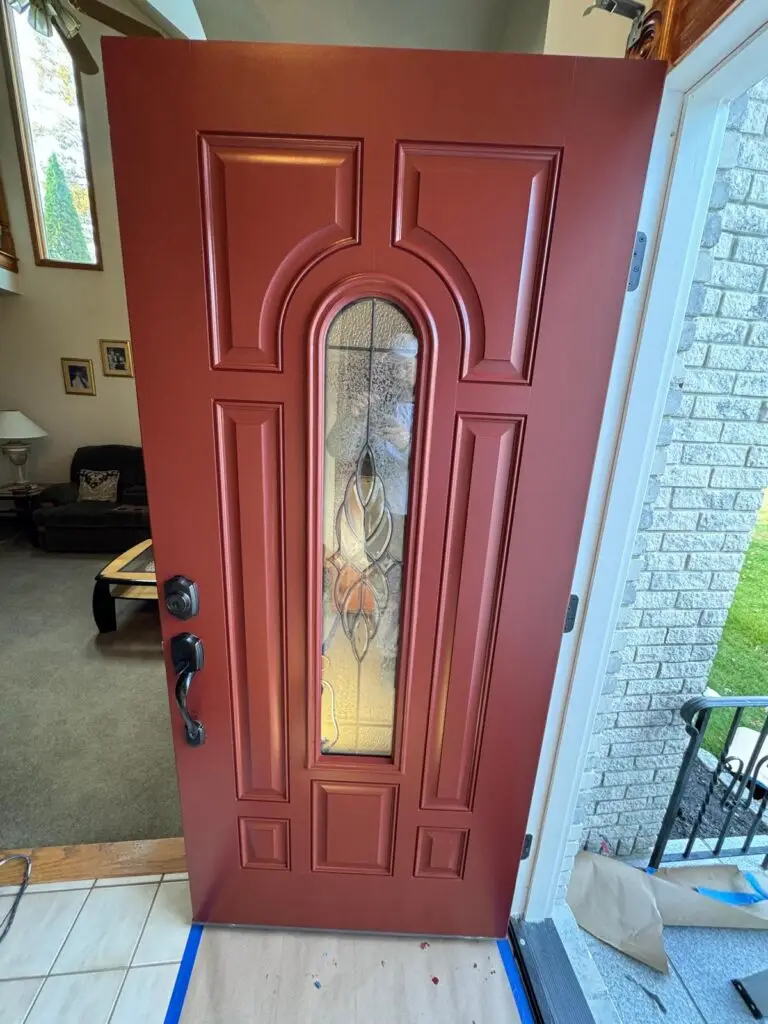
Tips: gloss vs matte, paired décor, maintenance
- Finish:
- High-Gloss: Offers a striking, reflective, formal look. It’s very durable and easy to clean, but will highlight any imperfections on the door surface.
- Satin/Semi-Gloss: The most common and recommended choice. Provides a beautiful sheen, good durability, and is easier to maintain than high-gloss while still looking elegant.
- Matte/Flat: Can look very modern and sophisticated, but is less durable and harder to clean.
- Paired Décor:
- Hardware: Polished brass, brushed nickel, or matte black hardware all look stunning against a black door.
- Lighting: Wall sconces or overhead lights with a metallic finish will pop.
- Planters: Vibrant green plants or colorful flowers in large planters will add life and soften the strong color.
- Maintenance:
- Clean Regularly: Wash the door periodically with a mild soap and water to remove dirt and pollutants.
- Inspect for Fading/Chips: Annually check for signs of fading or chipping, especially on sun-exposed doors. Touch up promptly.
- Quality Paint: Invest in a high-quality exterior paint designed for doors, with good UV resistance.
Mass Pro Painting helps homeowners in Massachusetts make informed decisions about their exterior paint colors, including dramatic choices like a black front door. Our team provides expert advice on paint types, finishes, and application techniques to ensure your front door is both beautiful and resilient.