
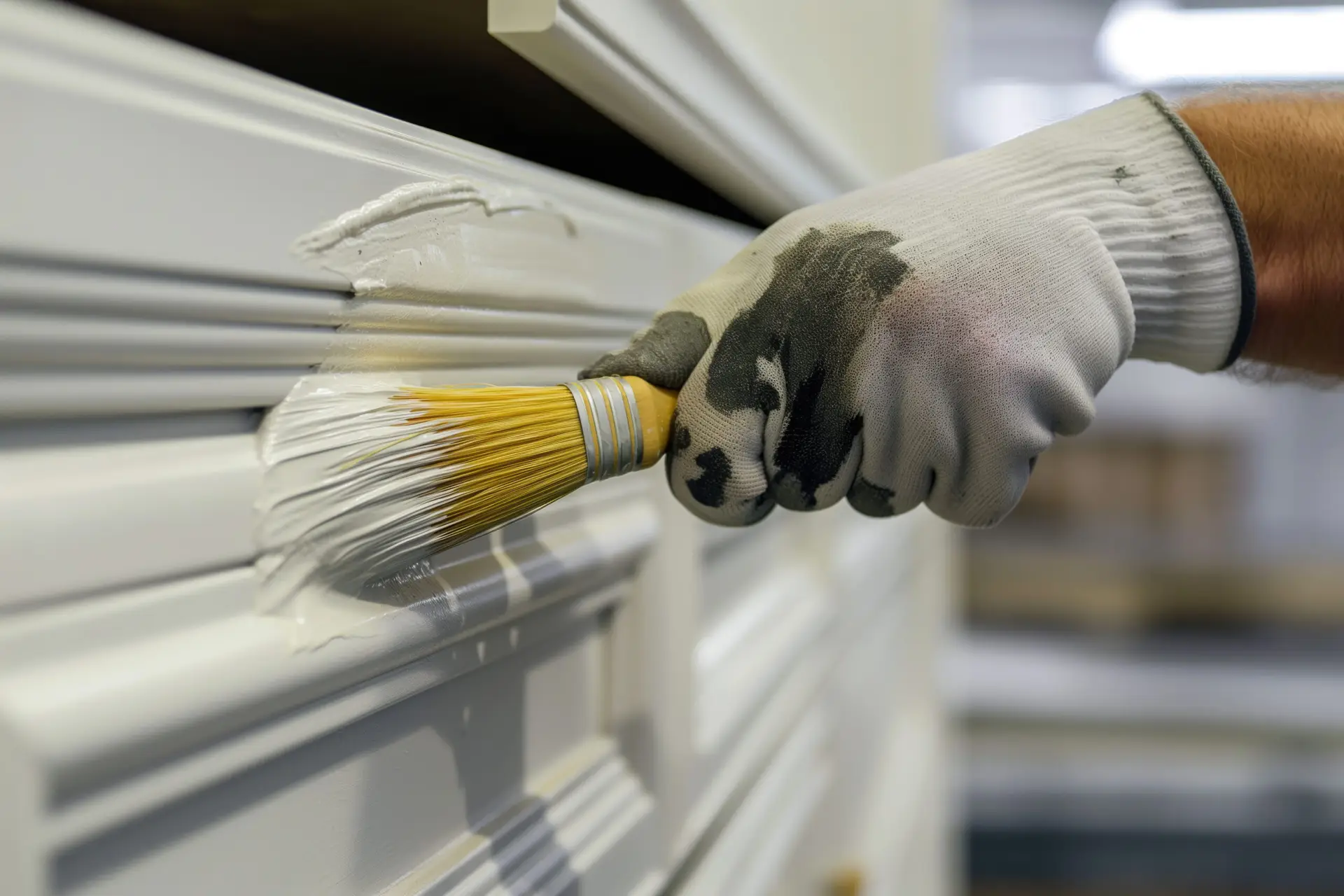
Refinishing your kitchen cupboards with a fresh coat of paint is one of the most transformative updates you can make to your home. However, painting cabinets is an entirely different skill set than painting walls. It requires specialized products, extensive preparation, and precise application techniques to achieve a durable, factory-like finish that will withstand years of heavy use.
Mass Pro Painting specializes in high-durability cabinet refinishing, providing expert results that add lasting value and beauty to your kitchen.
Why Painting Kitchen Cupboards Is Different from Wall Painting
The challenge of painting cabinetry stems from the unique demands of the surface and the materials involved.
Surfaces Are Horizontal/Vertical and Get Heavy Use
Kitchen cupboards, particularly the drawers and base cabinet fronts, are among the most frequently touched surfaces in your home. They face daily exposure to grease, moisture, food splatter, and heavy friction from opening and closing. They require a finish that is formulated for durability, not just visual appeal.
Needs Stronger Coatings and Proper Prep
Unlike interior latex wall paint, cabinet finishes must cure to a hard, chip-resistant shell. This requires specialized industrial coatings, often high-grade enamels or lacquers, and a meticulous, multi-stage preparation process to ensure maximum adhesion. If the surface is not properly degreased, sanded, and primed, the new paint will peel or scratch off quickly.
Hardware Removal, Doors, and Drawers Often Must Be Serviced
A professional job requires complete disassembly. Doors and drawers must be removed and often taken off-site to a controlled environment for cleaning, sanding, and application. Hardware (hinges, knobs, pulls) must be carefully removed and managed, and the holes may need patching or repair if new hardware is chosen.
Key Questions to Ask Your Cupboard Painter
Before hiring a contractor, ensure they possess the specialized knowledge required for cabinetry.
What Products and Coatings Do They Use (e.g., KCMA-approved)?
Ask specifically about the brand and type of paint. Look for professional-grade, cabinet-specific finishes, such as high-quality water-based alkyd enamels or lacquers. Ideally, the product should be KCMA (Kitchen Cabinet Manufacturers Association) approved or meet similar high standards for durability, resistance to chemicals, and ease of cleaning.
Do They Have Experience in Cabinet Refinishing?
Refinishing is not the same as painting. A painter experienced only with walls may lack the necessary tools (like HVLP sprayers) or knowledge of industrial coatings. Ask to see a portfolio of past cabinet projects, not just wall painting.
What Is Their Process for Prep, Priming, and Finishing?
The quality of the finish depends 90% on the prep. A reliable professional should detail the following steps:
- Chemical Cleaning/Degreasing: Removing all oil and grease (crucial).
- Sanding: Lightly sanding or “scuffing” the surface for mechanical adhesion.
- Priming: Using a high-adhesion primer formulated to bond to the existing surface (e.g., wood, laminate, or old lacquer).
- Finish Coats: Applying two or more topcoats with proper drying time between applications.
Do They Provide a Warranty?
A professional cabinet job should come with a warranty covering defects such as peeling, chipping, or bubbling for at least two to five years. This demonstrates confidence in their preparation process and materials.
Typical Process & Timeline
While every project is unique, here is the standard process Mass Pro Painting follows for professional cabinet refinishing:
Remove Doors/Hardware
All doors, drawer fronts, and hardware are carefully labeled and removed. Often, the doors and fronts are transported off-site to a spray booth for a dust-free, high-quality finish.
Clean, Degrease, and Sand Surfaces
The remaining cabinet boxes (frames) are meticulously cleaned, degreased, and lightly sanded in the home. This requires comprehensive masking of surrounding walls, floors, and appliances.
Prime and Spray or Roll Finish
A specialized bonding primer is applied to all surfaces. After curing, two to three coats of the chosen high-durability finish (enamel or lacquer) are applied. Spraying offers the smoothest, most factory-like finish, while specialized rolling techniques can also provide excellent results.
Reinstall Hardware and Allow Cure Time
Once the final coat is dry to the touch, hardware is reinstalled, and the doors are rehung. However, it is essential to understand the difference between dry time (safe to touch) and cure time (safe for heavy use), which can take 7 to 30 days depending on the product. Clients must treat the cabinets gently during this period.
How to Choose the Right Finish for Longevity
The type of coating used is the single most important factor for long-term durability.
Durable Water-Based Enamels vs. Conventional Coatings
Modern water-based alkyd enamels are highly recommended. They combine the easy cleanup of water-based paint with the hardened, durable finish of traditional oil-based coatings. They resist yellowing better than conventional oil-based paints and dry to a much harder finish than standard latex.
Importance of Proper Curing Time
The paint must fully cure to achieve its maximum hardness and resistance to chipping. If the cabinets are aggressively cleaned or subjected to heavy use before the cure time is complete, the finish will be easily damaged. Your painter should specify the product’s full cure time.
Choosing the Right Sheen (Satin/Semi-Gloss)
- Satin: Provides a subtle, elegant, low-sheen finish that hides minor imperfections well.
- Semi-Gloss: More reflective and traditional. It is highly durable and is the easiest sheen to wipe clean of grease and grime. Most kitchen cabinets are finished in a satin or semi-gloss for longevity.
FAQs
“Can I paint my cabinets myself?”
While you can technically paint them yourself, achieving a durable, professional, and smooth finish is extremely difficult without commercial spray equipment, industrial-grade products, and a clean, controlled environment for drying. DIY results often peel or chip within a year due to inadequate preparation and insufficient coating hardness.
“How long does the paint job last?”
A professionally prepared and sprayed cabinet finish using high-quality enamel or lacquer should last 7 to 15 years before needing touch-ups or a repaint. This lifespan is dependent on the level of use, maintenance, and the quality of the product used.
“Is spray finish always better?”
For the smoothest, most durable, and most factory-like appearance, a sprayed finish is superior. It allows the paint to settle into a thin, even coat without brush marks. While some skilled professionals can achieve excellent results with specialized rolling techniques, spraying remains the gold standard for high-end cabinet refinishing.
Ready to revitalize your kitchen with a durable, beautiful finish?
Contact Mass Pro Painting today for a detailed consultation on our professional cabinet refinishing process and a free, no-obligation estimate.