
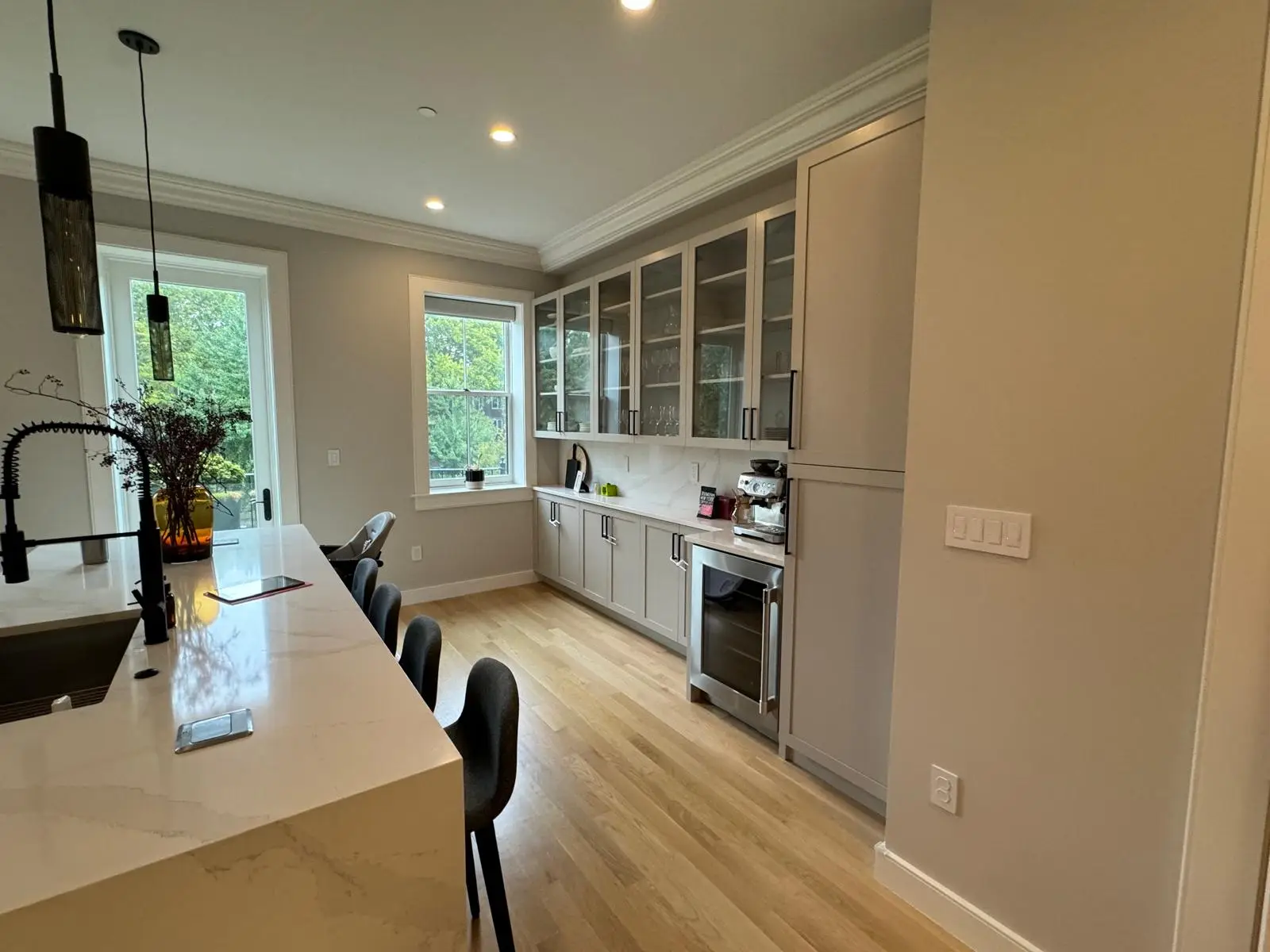
The kitchen is the heart of the home, a bustling hub for cooking, dining, and gathering. Its paint color profoundly impacts the room’s energy and aesthetic. Whether you’re aiming for a fresh, trendy look or a timeless, enduring appeal, choosing the right palette can make your kitchen truly shine.
Natural earth tones: sage green, taupe, blush pink
In 2025, a strong trend toward natural, comforting, and grounded palettes continues to dominate kitchen design:
- Sage Green: A serene, sophisticated green with gray undertones. Sage brings the tranquility of nature indoors, pairing beautifully with natural wood cabinets, brass hardware, and white or cream accents. It feels fresh and inviting without being overly bold.
- Taupe: A versatile blend of gray and brown, taupe offers warmth and sophistication. It’s a fantastic neutral that complements a wide range of cabinet colors (white, wood, even some dark blues) and provides a comforting, understated backdrop.
- Blush Pink (Muted/Dusty Rose): Moving beyond nurseries, muted blush or dusty rose tones are appearing in kitchens, adding a soft, warm, and unexpected touch of color. When paired with crisp whites, light woods, or subtle grays, it creates a gentle, inviting, and chic atmosphere.
Bold accents: vintage blue, navy, coffin black for depth
For those who want to make a statement or add dramatic depth, bold colors are increasingly popular:
- Vintage Blue (Muted/Deep Teal): Not a bright primary blue, but a deeper, more sophisticated blue with subtle grey or green undertones. It evokes a sense of history and charm, pairing beautifully with natural wood, brass, and classic white subway tile.
- Navy Blue: A timeless and elegant choice that adds depth and richness. Navy works exceptionally well with white or light wood cabinets, creating a classic nautical or Hamptons-inspired look. It’s versatile and can feel both traditional and modern.
- Coffin Black (Soft Black/Charcoal): For the truly daring, a soft or charcoal black on walls or as an accent can create stunning drama and sophistication. It makes other elements (like wood tones, metallic hardware, or colorful decor) pop. Best in kitchens with ample natural light to prevent it from feeling too oppressive.
Light neutrals for bright kitchens: creamy whites, greige
If you prefer a bright, airy, and expansive kitchen, light neutrals remain an enduring choice:
- Creamy Whites: Moving away from stark, sterile whites, creamy or off-white shades offer softness and warmth. They create a clean, crisp backdrop that brightens the space and allows other elements (cabinets, countertops, decor) to stand out.
- Greige: The perfect blend of gray and beige, greige offers the best of both worlds – the coolness of gray and the warmth of beige. It’s incredibly versatile, complements virtually any other color, and creates a sophisticated, calming environment.
Accent walls & ceiling colors for personality
- Accent Walls: If committing to a bold color on all walls feels too much, an accent wall can introduce personality and drama. Paint one wall (e.g., behind open shelving, near a dining nook) in a contrasting or bold color to create a focal point.
- Ceiling Colors: While traditionally white, a colored ceiling (especially if not the main wall color) can add an unexpected layer of design:
- Light Blue/Green: Can create an airy, sky-like effect.
- Same as Cabinets/Trim: Creates a cohesive, custom look.
- Dramatic Dark: A dark or black ceiling can add intimacy and definition, especially in a large, open-concept kitchen.
Color pairing with cabinets, counters, and hardware
Consider these relationships when choosing paint:
- Cabinets: The largest surface. If you have white cabinets, you have endless paint options. If your cabinets are wood or colored, choose a paint that complements their tone (e.g., warm paint with warm wood, cool paint with cool-toned cabinets).
- Countertops: Coordinate your paint with your countertop material (e.g., a subtle paint color to highlight a busy granite, or a bolder color to contrast with a simple white quartz).
- Hardware & Fixtures: Metals (brass, brushed nickel, black matte) can be beautifully enhanced by certain paint colors. Warm metals pop against cool blues or greens; cool metals look great with warm neutrals or deep tones.
- Flooring: Ensure the paint color harmonizes with your flooring material and color.
Application strategy: sample patches and coordination
- Sample Patches are Essential: Never commit to a color without painting large (at least 2×2 feet) sample patches on different walls in your kitchen. Observe them at different times of day, under natural light and artificial lighting.
- Consider Lighting: Kitchens often have various lighting types. Ensure your chosen color looks good under all conditions.
- Coordinate Flow: If your kitchen is open to other living spaces, ensure the kitchen paint color flows seamlessly with the adjacent room colors for a cohesive home.
- Prep is Key: As always, proper cleaning, patching, and priming are essential for a flawless and lasting finish in a busy kitchen environment.
Mass Pro Painting helps homeowners in Massachusetts create kitchens that are both beautiful and functional. Our expert team assists with color selection and delivers impeccable paint application, ensuring your kitchen is a space you’ll love for years to come.