
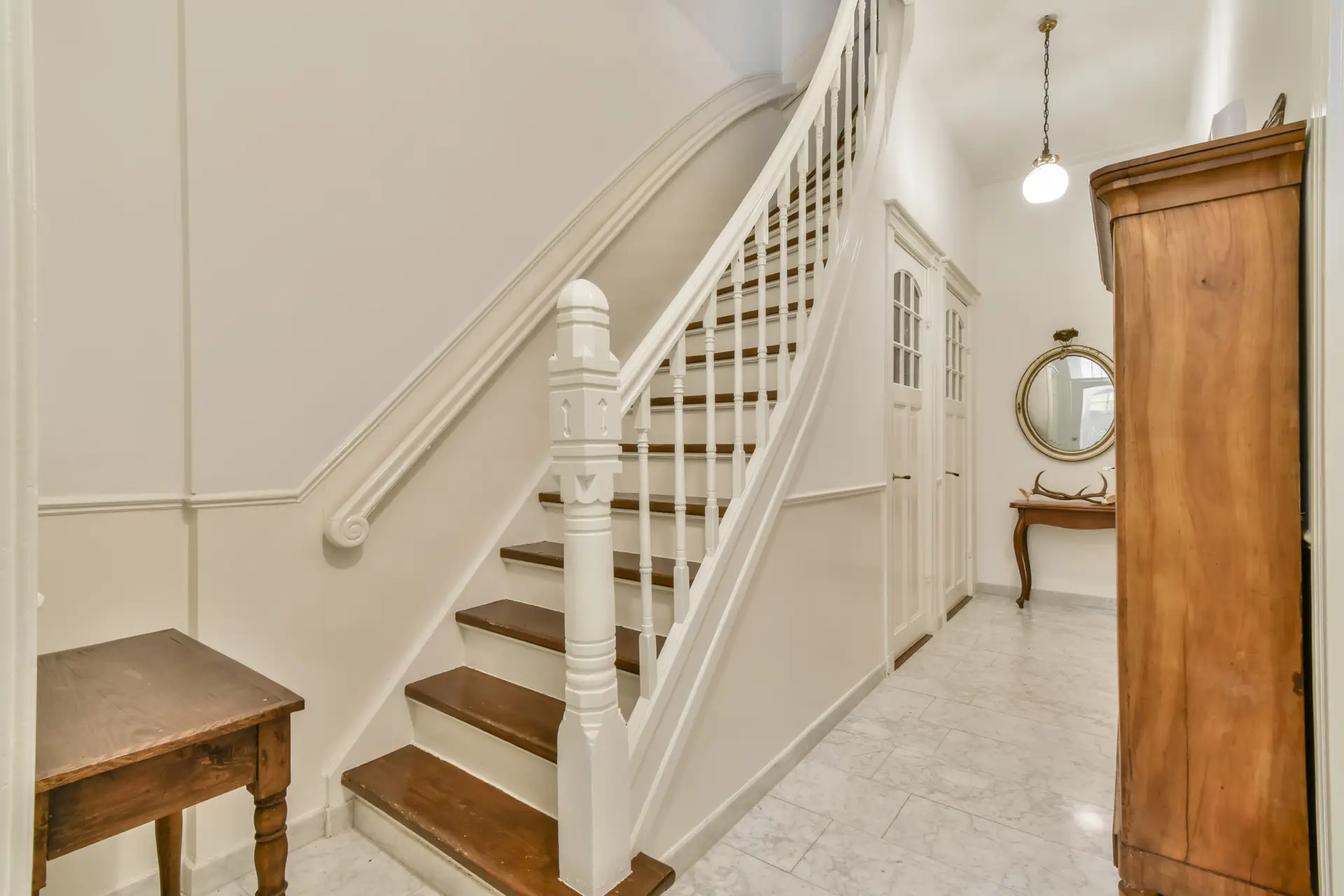
The stair handrail is one of the highest-traffic surfaces in any home. Constant friction from hands means that any paint or stain applied must be exceptionally durable and adhere perfectly to resist premature wear and chipping. Repainting a handrail is an intensive project that requires meticulous preparation and the use of specialized, hard-curing enamel products.
Mass Pro Painting offers expert services for refinishing stair systems, guaranteeing a smooth, highly durable finish that withstands daily use and elevates your home’s interior.
Tools and Materials Needed
Selecting the right supplies is essential for creating a factory-smooth, long-lasting handrail finish.
Sandpaper (120–220 grit)
You will need varying grits:
- 120 Grit: Used initially to strip away peeling or failing old paint and to smooth out deep imperfections.
- 180 Grit: Used to smooth the surface after the 120-grit phase.
- 220 Grit: Used for final smoothing before priming, and lightly sanding between coats of paint/primer.
Degreaser or Cleaner
A powerful degreaser (such as a TSP substitute or a dedicated cabinet cleaner) is non-negotiable. Handrails absorb oils, dirt, and skin products over time, and any remaining residue will cause the new paint to lift and fail almost immediately.
Primer for Wood
Use a high-quality, stain-blocking, bonding primer designed for interior trim and wood. This ensures maximum adhesion, blocks wood tannins from bleeding through light paint colors, and creates a uniform base for the topcoat.
Enamel Paint or Stain
- For Painting: Use a water-based alkyd (hybrid) enamel or a dedicated cabinet/trim enamel. These products cure to a much harder finish than standard wall paint.
- For Staining: Use a high-quality wood stain, followed by a clear topcoat (polyurethane or polycrylic).
Step-by-Step Repainting Process
The success of a handrail project lies entirely in preparation. Do not rush the first three steps.
Step 1: Clean and Remove Dirt, Oils, and Grime
Apply the degreaser liberally and scrub the entire handrail surface with a nylon scouring pad or clean rag. Wipe the surface clean with a rag dampened with clean water until there is no soap residue remaining. Allow the rail to dry completely.
Step 2: Sand the Handrail Evenly
The goal is to create a perfectly smooth surface and remove any failing old finish.
- Remove Failure: Start with 120-grit sandpaper only on areas with peeling paint or deep scratches.
- Smooth: Move to 180-grit paper to smooth out the coarser sanding marks.
- Final Prep: Finish with 220-grit paper to achieve a butter-smooth surface. Wipe all sanding dust away with a tack cloth before proceeding.
Step 3: Apply Bonding or Wood Primer
Apply one thin coat of bonding primer using a high-quality brush. Focus on achieving an even coat without drips or runs. Allow the primer to dry fully according to the manufacturer’s directions (usually 2–4 hours).
Step 4: Apply 1–2 Coats of Paint or Stain
- If Painting: Apply the first coat of enamel. Crucially, allow this coat to dry fully.
- If Staining: Apply the stain and wipe off the excess after the recommended time. Allow the stain to dry for the full time required (often 24 hours) before sealing.
Step 5: Seal with Polyurethane If Needed
If you chose a stain for a natural look, you must seal it with a clear protective topcoat (polycrylic or polyurethane). If you used a high-durability enamel paint, a separate topcoat is usually unnecessary.
Choosing the Right Finish
The sheen you choose determines both the visual style and the long-term durability of the handrail.
Satin for Modern Look
Satin has a low, subtle sheen that is the least reflective. It is popular in modern design as it provides a smooth, soft look and hides fingerprints better than glossier finishes.
Semi-Gloss for Durability
Semi-gloss is the most common and recommended finish for high-wear areas like handrails. Its high sheen comes from added resins, which create a harder, more resistant surface that is easy to wipe clean and highly durable against constant friction.
Stain + Clear Coat for Natural Wood Lovers
If your goal is to showcase the natural wood grain, choose a wood stain. You must then protect it with at least two or three coats of clear polyurethane or polycrylic topcoat. The clear coat provides the actual protection against hand oils and abrasion.
Extra Tips for Best Results
Follow these professional tips to ensure a flawless and lasting finish.
Let Paint Cure Fully Before Heavy Use
The paint may feel dry to the touch in hours, but it will not achieve its full hardness until it has fully cured (often 5 to 7 days, or up to 30 days for some hybrid enamels). During this time, use the handrail gently to prevent premature scratching.
Avoid Thick Coats to Prevent Drips
Because handrails are curved surfaces, thick coats of paint will inevitably sag, pool, and drip. Always apply two thin coats rather than one thick coat. Thin coats dry faster, cure harder, and minimize the risk of flaws.
Sand Lightly Between Coats
After the primer and the first paint coat are dry, use a very fine-grit sanding sponge or 220-grit paper to gently smooth the surface and remove any minor imperfections (dust nibs or brush marks). This ensures maximum smoothness for the final coat.
FAQs
“Can I paint over stained wood?”
Yes, you can paint over stained wood, but only after proper preparation. You must sand the stained finish lightly (to create an adhesion profile) and apply a high-quality, oil-based or shellac-based primer to seal the old stain and ensure the new paint bonds securely.
“Do I need a topcoat?”
If you use a quality, semi-gloss or high-gloss enamel paint designed for trim, a separate topcoat is usually not needed. If you use a stain, a clear protective topcoat (like polyurethane) is absolutely mandatory to prevent wear from hand oils and friction.
“How long does paint on a handrail last?”
A professionally applied coat of high-durability enamel, backed by rigorous cleaning and priming, should last 5 to 8 years before significant wear or chipping occurs. The lifespan is heavily dependent on household traffic and the quality of the enamel used.
Ready to revitalize your home’s staircase with a durable, beautiful finish?
Contact Mass Pro Painting today for a professional estimate on handrail and stair system refinishing.